

The Boston Tea Party
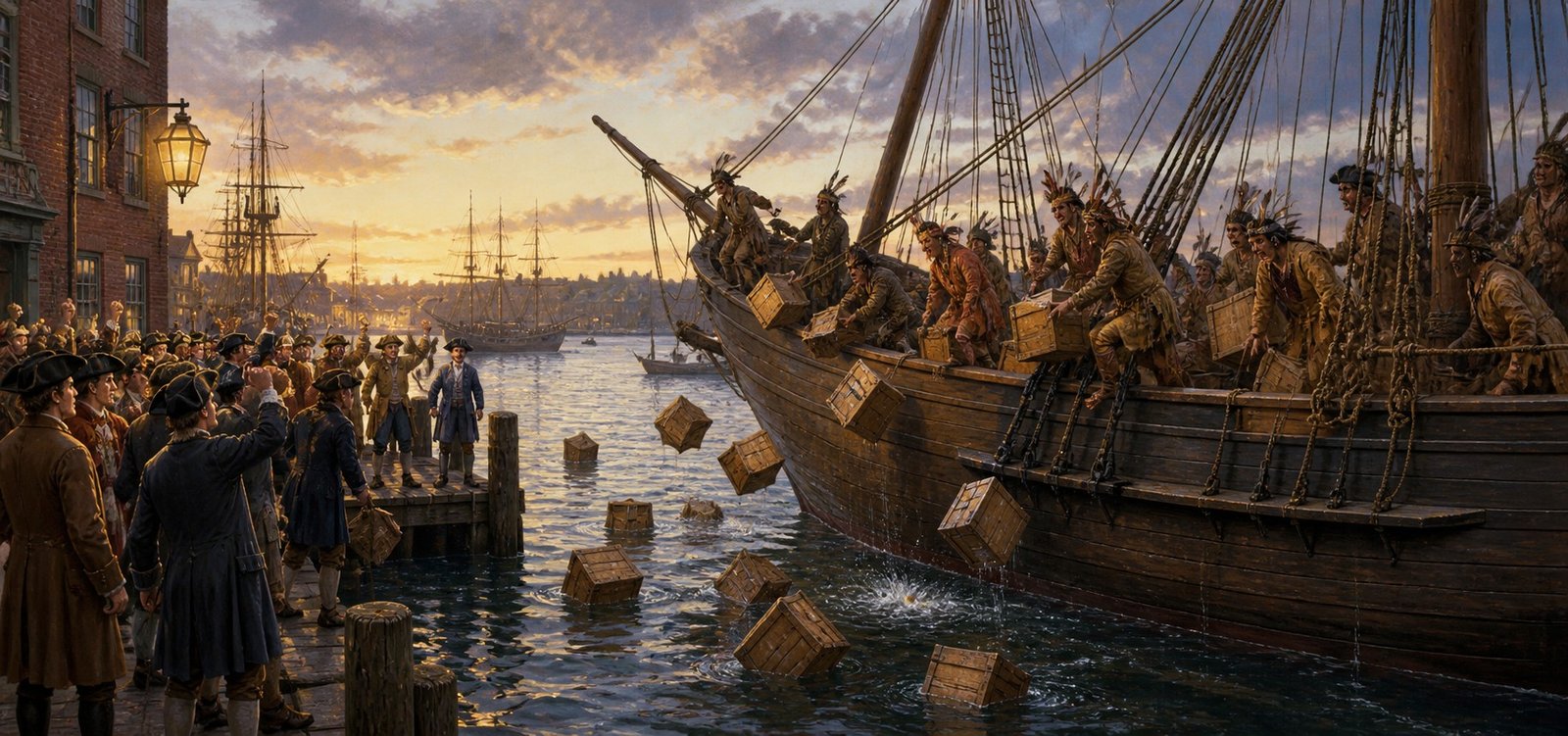
The Boston Tea Party was one of the most important events leading to the American Revolution. It took place on December 16, 1773, in Boston, when a group of colonists protested against British taxation and control over colonial trade by dumping tea into Boston Harbor.
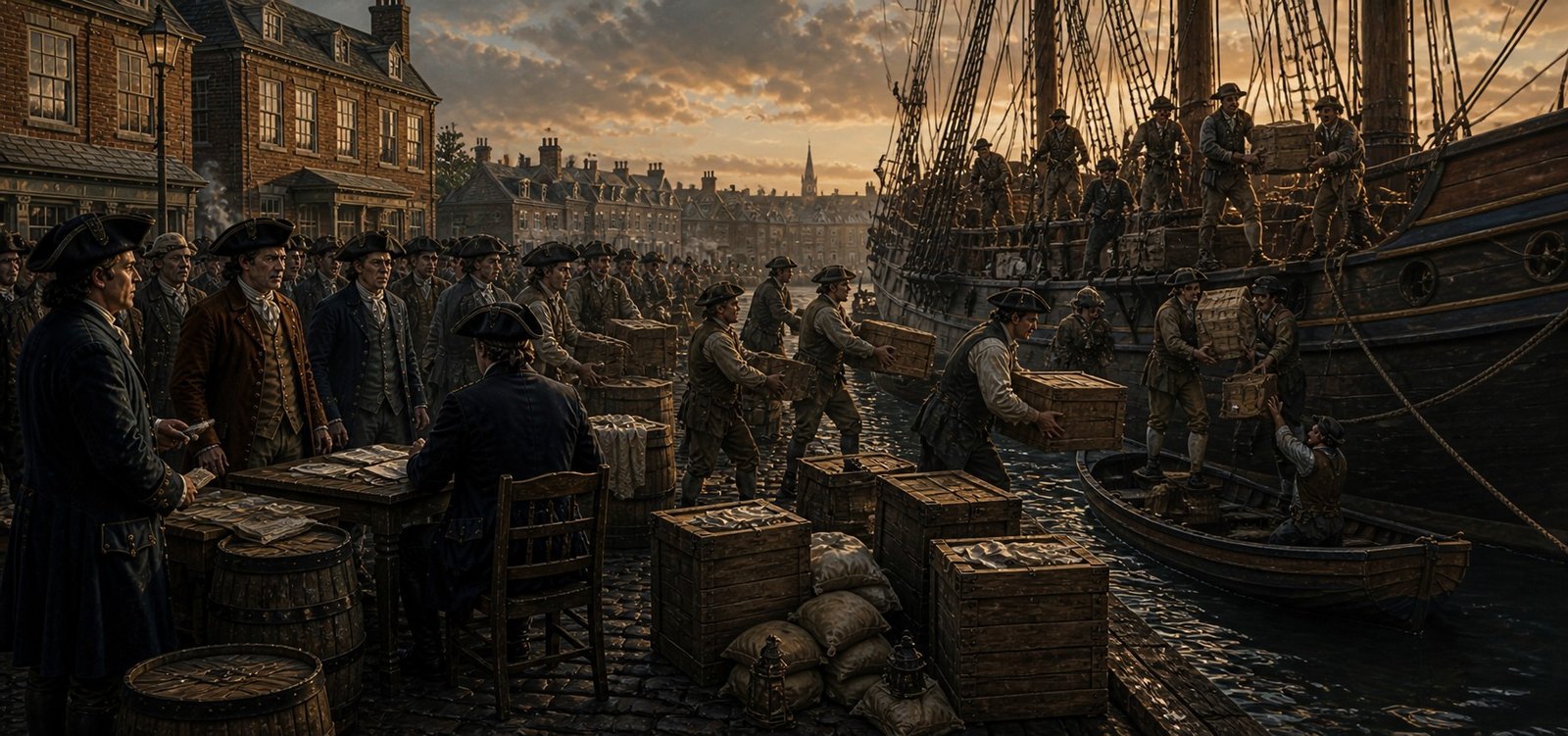
The protest was sparked by the Tea Act, which allowed the British East India Company to sell tea directly to the colonies while maintaining a tax on it. Although the tea was cheaper, many colonists believed that buying it would mean accepting Parliament’s right to tax them without representation. Opposition quickly grew, especially in Boston, where public meetings and protests were organized by groups such as the Sons of Liberty.
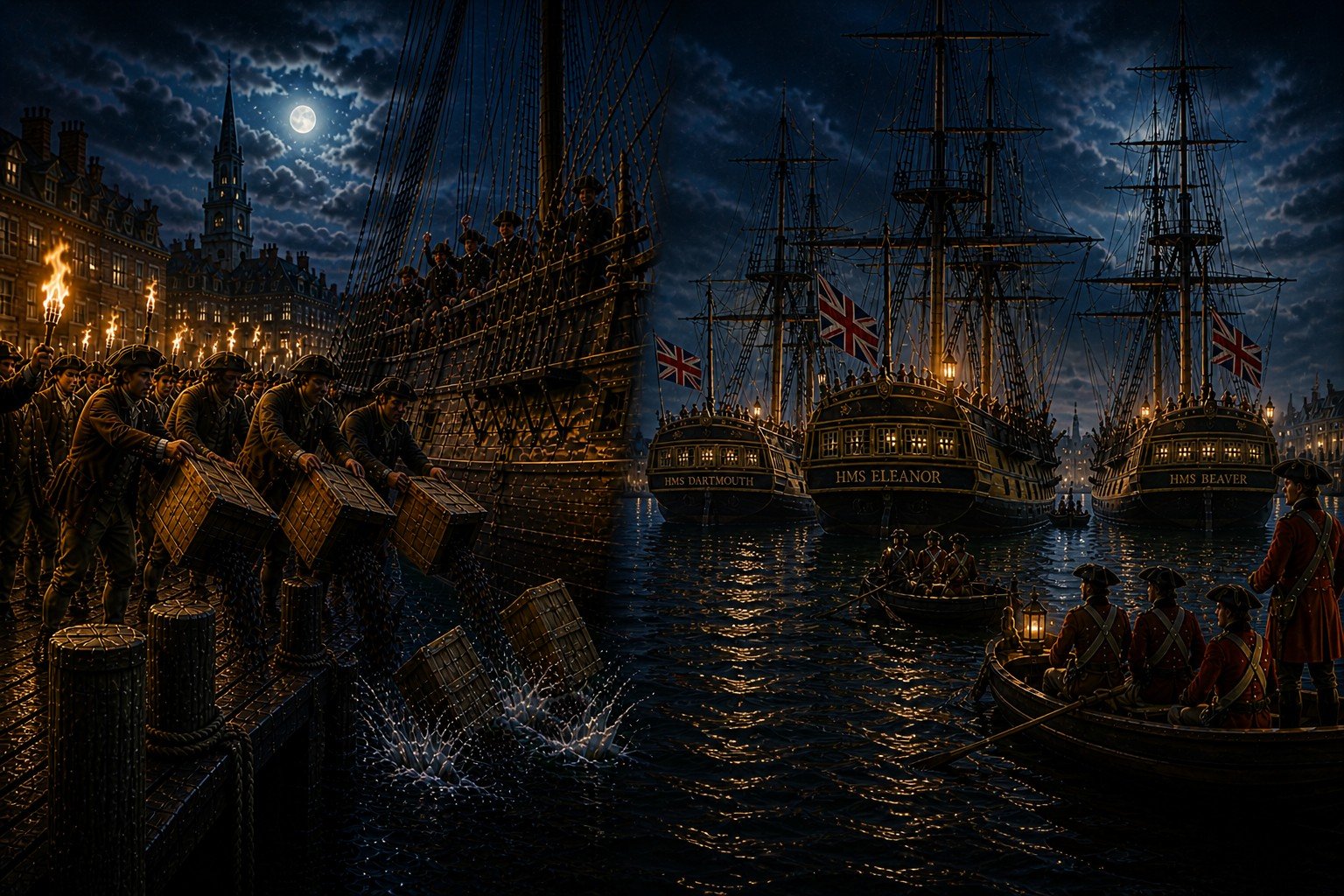
On the night of the Tea Party, colonists boarded the ships Dartmouth, Eleanor, and Beaver and threw 342 chests of tea into the harbor. The action was deliberate and organized, targeting the tea itself rather than the ships or crews.
The British government responded harshly with the Coercive Acts, which punished Boston and increased tensions throughout the colonies. Rather than ending resistance, these measures united many colonists against British rule and helped push the colonies closer to revolution and eventual independence.
Learn MorePeople, Events & Background
About The Boston Tea Party
Acts
Townshend Acts
The Townshend Acts were a series of laws passed by the British Parliament that placed taxes on goods imported into the American colonies, including glass, paper, paint, lead, and tea. Introduced by Charles Townshend, the acts were designed to raise revenue and reinforce British authority over the colonies after the costly French and Indian War.
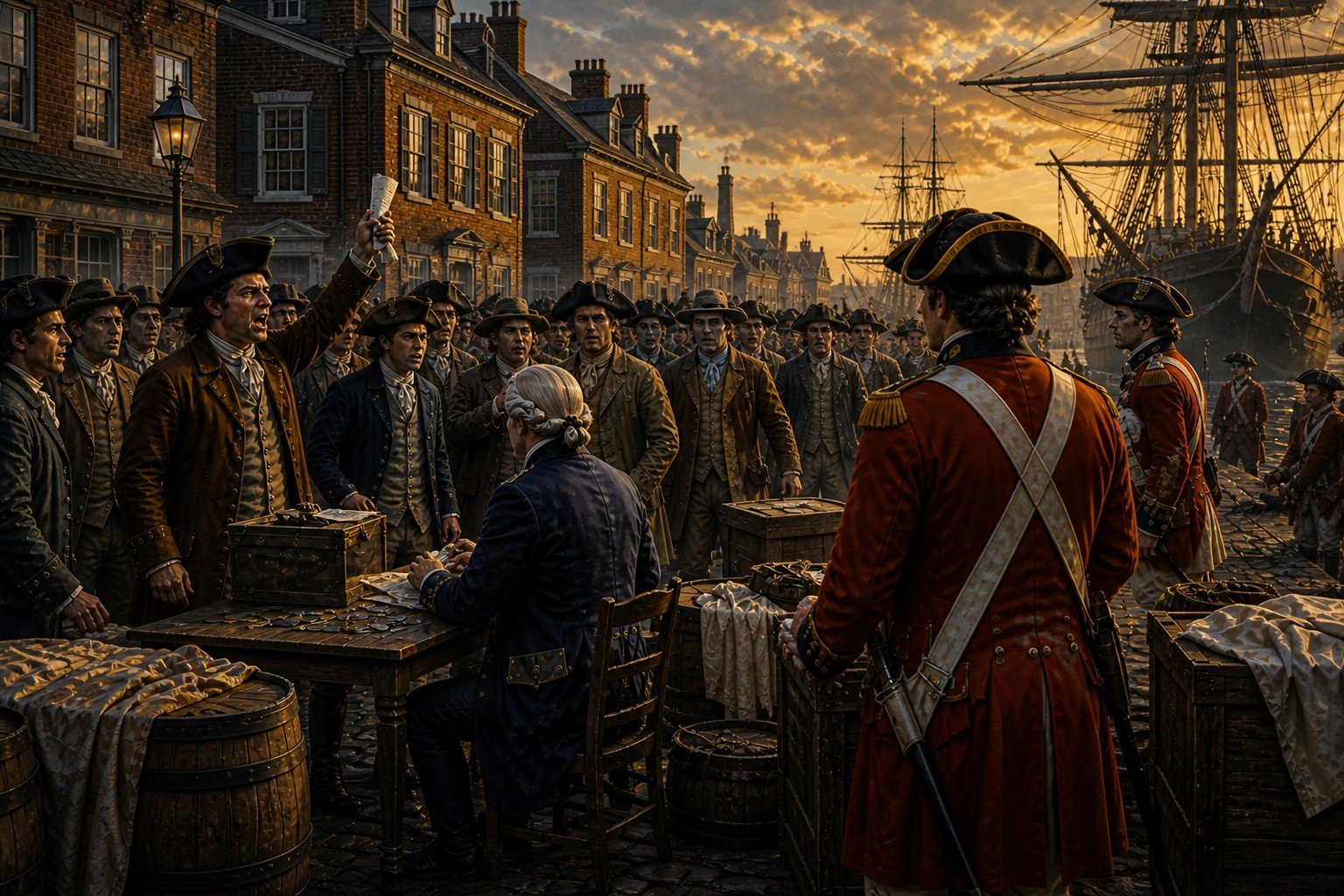
The Townshend Acts became highly controversial because many colonists believed Parliament had no right to tax them without representation. In Boston, opposition was especially strong, leading to boycotts of British goods and growing resistance organized by groups such as the Sons of Liberty. Tensions increased further when British troops were sent to Boston to maintain order, contributing to events such as the Boston Massacre in 1770.
Although most of the Townshend duties were eventually repealed, the tax on tea remained. This was significant because it kept alive the central dispute over taxation and British authority. When the Tea Act of 1773 was introduced, many colonists saw it as another attempt to force acceptance of the tea tax.
The Townshend Acts therefore helped create the political atmosphere that led directly to the Boston Tea Party. They strengthened colonial resistance, unified opposition movements, and turned tea into a powerful symbol of British control and colonial defiance.
Organization
East India Company
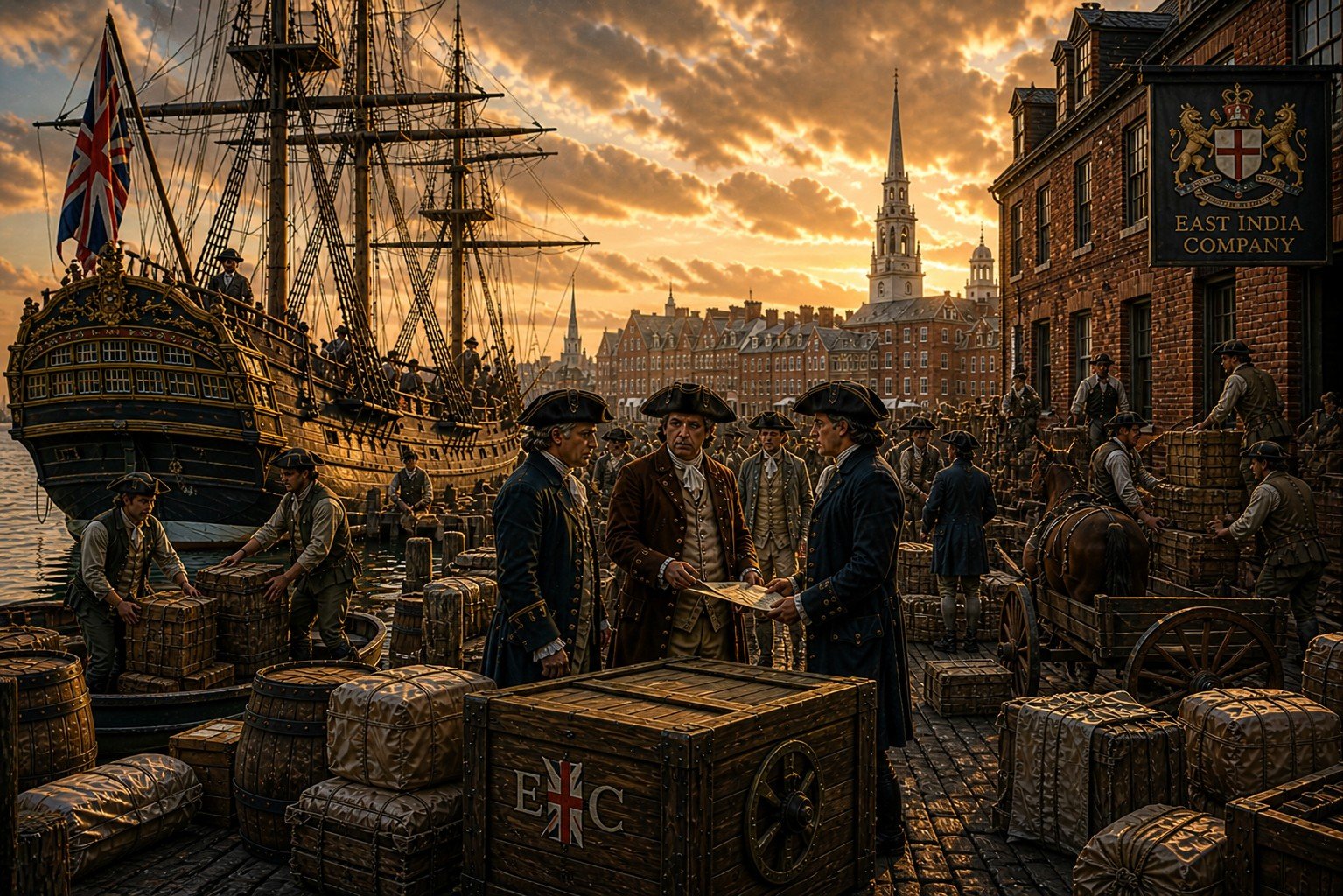
The British East India Company played a major role in the events that led to the Boston Tea Party. By the early 1770s, the Company was struggling financially due to declining tea sales and large quantities of unsold tea stored in Britain. To help the Company recover, the British government passed the Tea Act of 1773.
The Tea Act allowed the East India Company to sell tea directly to the American colonies without using British middlemen. This lowered the price of tea, even with the existing tax still attached. British officials believed colonists would welcome the cheaper tea, but many Americans viewed the act very differently. Colonists believed it was an attempt to make them accept Parliament’s right to tax them without representation.
The Company’s involvement also threatened colonial merchants and smugglers who relied on the tea trade. By giving the East India Company a major advantage, the Tea Act appeared to create a monopoly over tea sales in the colonies. This increased anger toward both Britain and the Company itself.
When ships carrying East India Company tea arrived in Boston, resistance quickly formed. Colonists refused to allow the tea to be unloaded, and on December 16th, 1773, protesters boarded the ships and dumped 342 chests of tea into Boston Harbor.
The East India Company therefore became a symbol of British economic control and helped trigger one of the most famous acts of protest in American history.
Ships
Boston Tea Party Ships
The three ships involved in the Boston Tea Party were the Dartmouth, the Eleanor, and the Beaver. These merchant vessels carried tea shipped by the British East India Company under the Tea Act of 1773, which had become highly controversial in the American colonies.
The Dartmouth was the first ship to arrive in Boston in November 1773, immediately becoming the focus of colonial protests. The Eleanor arrived shortly afterward, followed by the Beaver, whose arrival was delayed because of a smallpox quarantine. Together, the three ships carried 342 chests of tea into Boston Harbor.
Colonists opposed to British taxation demanded that the ships return to Britain without unloading their cargo. Large public meetings were held at the Old South Meeting House, where thousands gathered to debate how to respond. Governor Thomas Hutchinson refused to allow the ships to leave until the tea duties were paid.
On the night of December 16, 1773, a group of colonists boarded all three ships and systematically dumped the tea into the harbor. The destruction of the cargo transformed the Dartmouth, Eleanor, and Beaver into lasting symbols of colonial resistance and the growing movement toward the American Revolution.