The Boston Massacre and the Boston Tea Party are often treated as separate events, but they are closely connected stages in the same escalating conflict between the American colonies and Great Britain. Together, they illustrate how tensions in Boston evolved from uneasy coexistence to open resistance, helping to set the stage for the American Revolution.
The Boston Massacre occurred on March 5, 1770, during a period when British troops were stationed in Boston to enforce imperial laws and maintain order. Their presence was deeply resented by many colonists, who viewed it as an occupation force rather than protection. Friction between soldiers and civilians was common, fueled by economic competition, political disagreement, and daily confrontations. On the night of the massacre, a crowd gathered around a British sentry outside the Old State House. What began as a tense standoff escalated quickly. Amid shouting, thrown objects, and confusion, British soldiers fired into the crowd, killing five colonists, including Crispus Attucks.
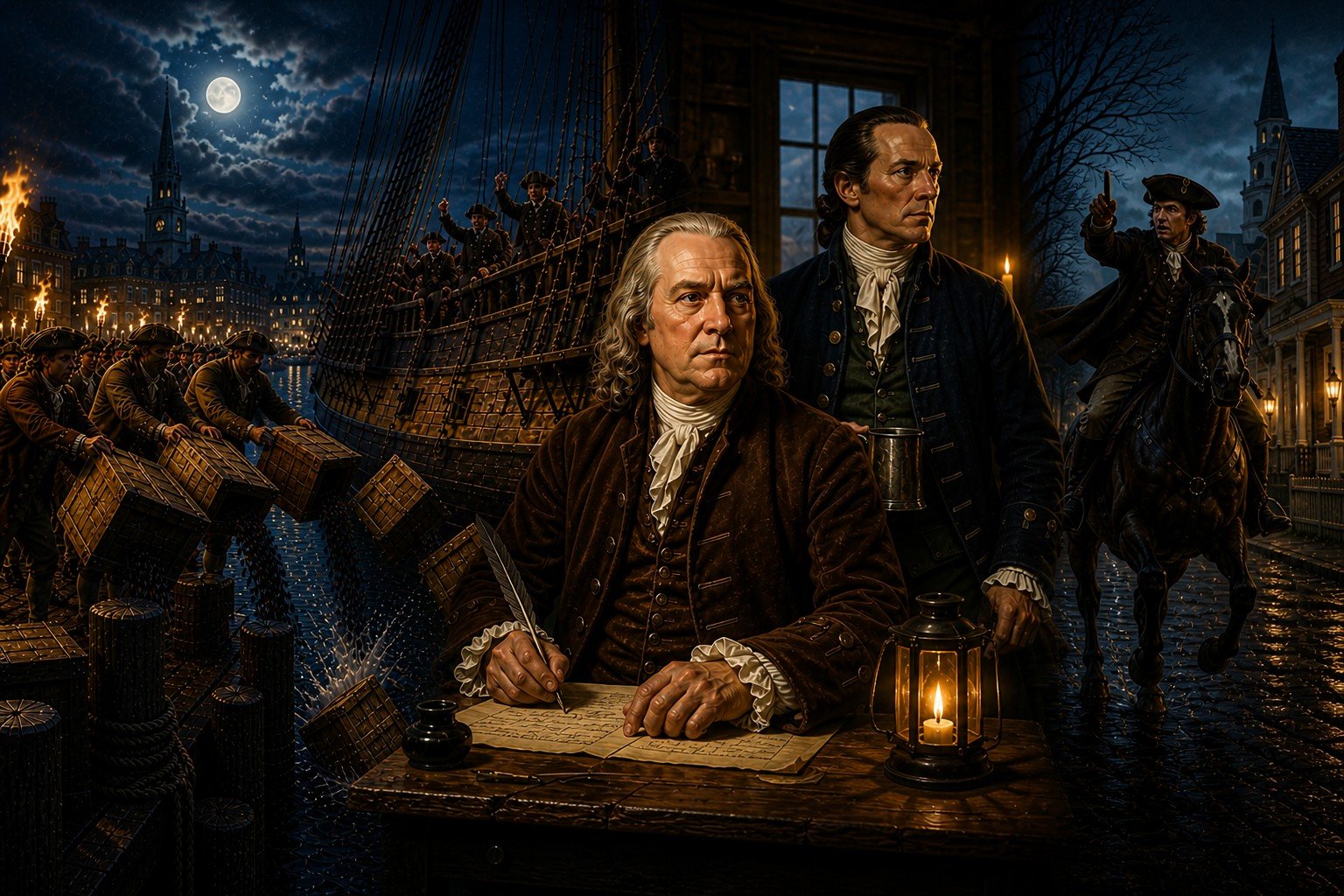
Although the number of casualties was relatively small, the political impact of the event was enormous. Colonial leaders recognized the power of the incident as a symbol. Samuel Adams and other Patriots used it to galvanize public opinion against British rule, framing it as evidence of tyranny and brutality. Paul Revere produced an engraving that depicted the soldiers firing in a coordinated, deliberate manner, a portrayal that spread widely and shaped colonial perceptions. The massacre transformed abstract grievances about taxation and governance into a vivid narrative of violence and injustice.
In the years immediately following the Boston Massacre, tensions did not disappear, but they shifted in form. British authorities withdrew most of their troops from Boston in an attempt to reduce friction, and for a time, open conflict subsided. However, the underlying issues remained unresolved. Colonists continued to object to taxation without representation and to the broader question of Parliament’s authority over the colonies.
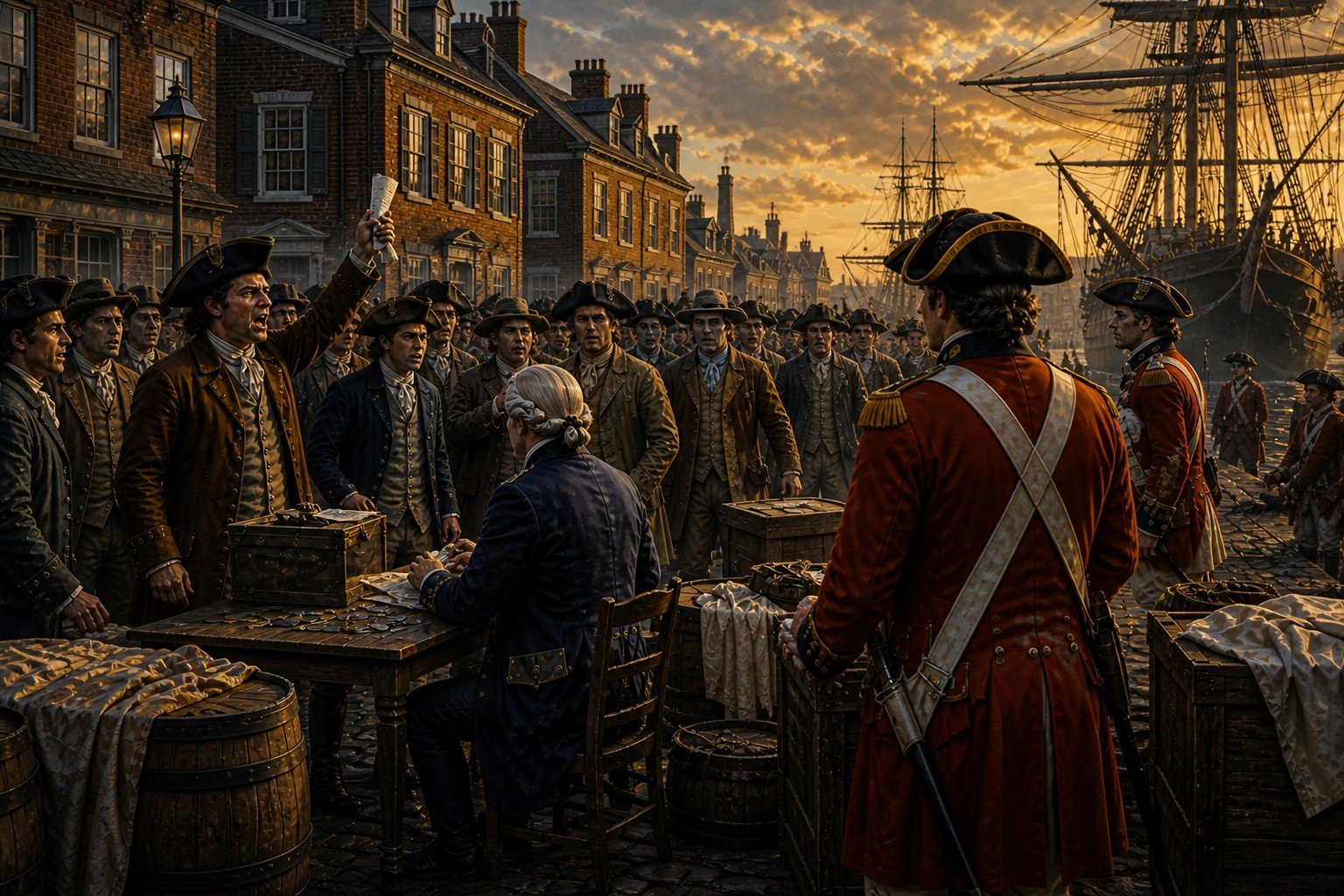
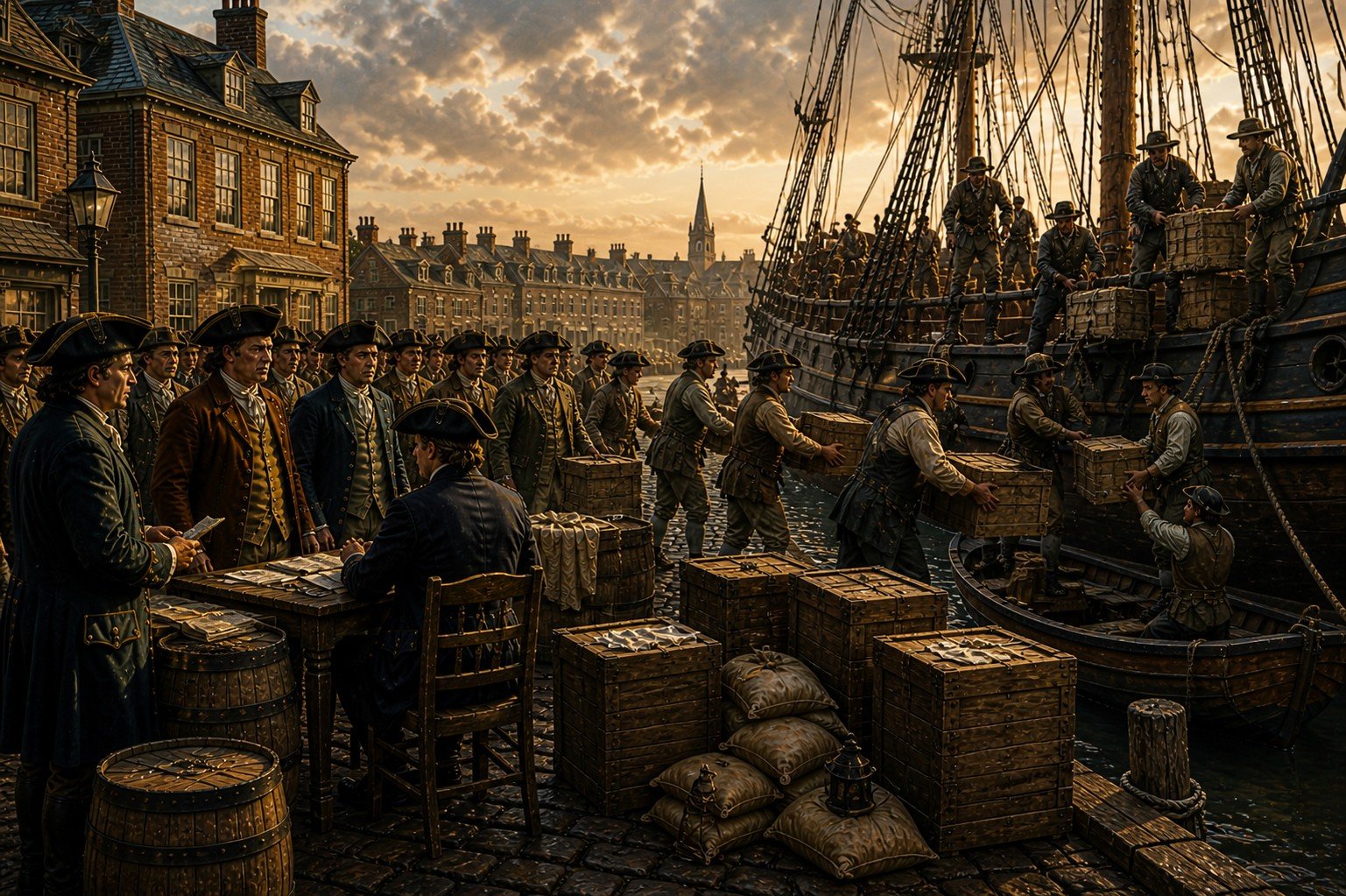
By 1773, these tensions resurfaced in a new context with the passage of the Tea Act. While the act actually lowered the price of tea, it reinforced the principle that Britain had the right to tax the colonies. Many colonists saw this as a strategic move to gain acceptance of taxation rather than a genuine economic benefit. The memory of the Boston Massacre played an important role in shaping how colonists responded. It had already established a narrative in which British authority was associated with coercion and potential violence, making compromise more difficult.
When tea shipments arrived in Boston Harbor, resistance quickly organized. Meetings were held at the Old South Meeting House, where large crowds debated how to respond. The leadership of figures like Samuel Adams helped channel public anger into coordinated action. The emotional and political groundwork laid by the Boston Massacre meant that many colonists were now more willing to take decisive, and even radical, steps.
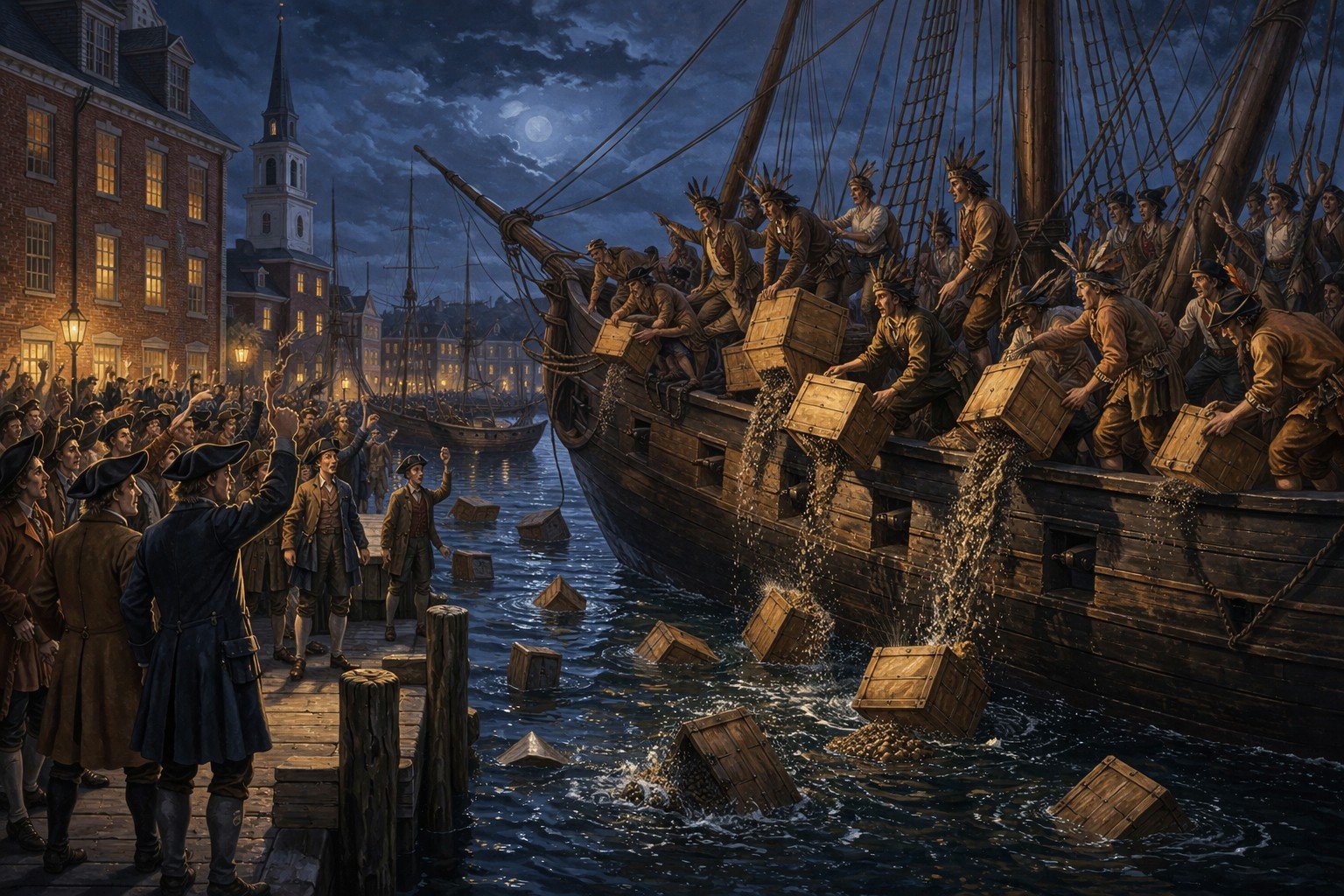
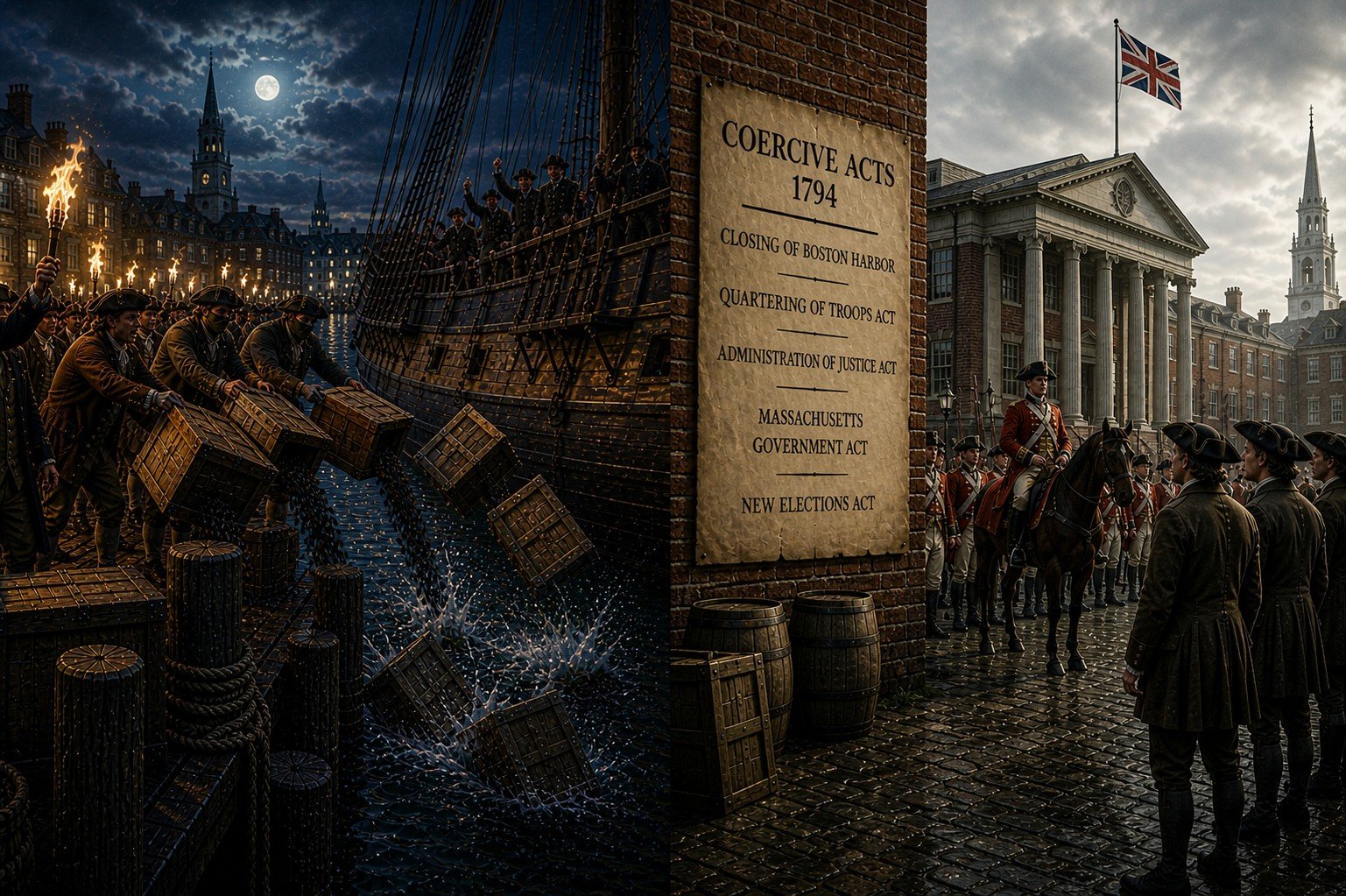
On December 16th, 1773, that step came in the form of the Boston Tea Party. Members of the Sons of Liberty and other participants boarded ships in the harbor and destroyed 342 chests of tea by dumping them into the water. Unlike the chaotic violence of the Boston Massacre, the Tea Party was highly organized and disciplined. The protesters targeted property rather than people, demonstrating a shift in strategy from reactive confrontation to deliberate political action.
The relationship between the two events can be understood as both psychological and strategic. The Boston Massacre heightened colonial fears and anger, creating a sense of shared grievance and injustice. It also provided powerful imagery and propaganda that unified opposition to British rule. By the time of the Boston Tea Party, this sense of unity had matured into a more coordinated resistance movement capable of executing large-scale actions.
At the same time, the British response to each event further linked them. After the Boston Massacre, authorities attempted to restore order through legal means, including the trial of the soldiers. After the Boston Tea Party, however, the response was far harsher. The Coercive Acts, which included closing Boston Harbor and limiting self-governance, were intended to punish the city but instead intensified colonial solidarity. In this way, the Tea Party, shaped in part by the legacy of the massacre, provoked a response that pushed the colonies even closer to rebellion.
The Boston Massacre and the Boston Tea Party represent two critical phases in the breakdown of relations between Britain and its American colonies. The massacre exposed the volatility of the situation and the potential for violence, while the Tea Party demonstrated a willingness to engage in direct, organized resistance. Together, they show how a series of interconnected events, rather than a single moment, drove the colonies toward independence.