The Sons of Liberty were a loose but highly effective network of colonial activists who played a decisive role in organizing resistance to British policies in the years leading up to the American Revolution. Their influence reached its most dramatic expression in the Boston Tea Party, where their planning, leadership, and mobilization helped transform widespread discontent into a coordinated act of defiance.
The Sons of Liberty first emerged in response to the Stamp Act of 1765, which imposed direct taxes on the colonies. From the beginning, the group was not a formal organization with a fixed membership, but rather a coalition of merchants, artisans, and political leaders united by opposition to British taxation without representation. In Boston, the movement quickly gained momentum, with figures such as Samuel Adams, John Hancock, and others taking on leadership roles.
The Sons of Liberty used a variety of methods to resist British authority. They organized protests, coordinated boycotts of British goods, and used public meetings to spread their message. They also relied heavily on communication networks, distributing pamphlets and letters that connected activists across different colonies. These strategies allowed them to build a sense of shared purpose and collective identity, which would prove essential in later confrontations.
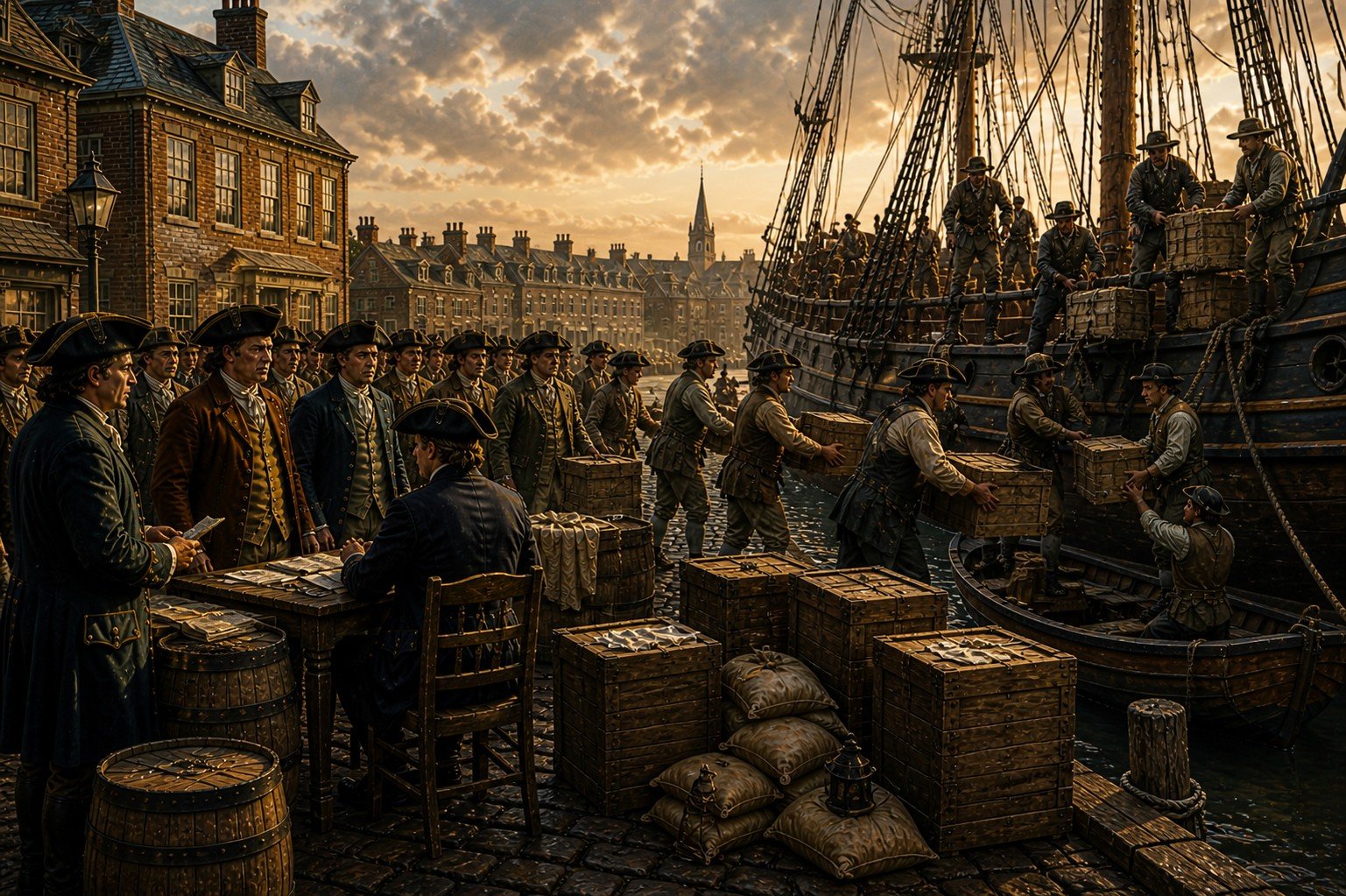
By the early 1770s, tensions between the colonies and Britain had intensified, particularly over the issue of taxation. The Tea Act of 1773, which allowed the British East India Company to sell tea directly to the colonies, became a focal point for opposition. Although the act made tea cheaper, it retained the existing tax, reinforcing Parliament’s claim to the right to tax the colonies. For the Sons of Liberty, this was not simply an economic issue but a fundamental challenge to colonial rights.
When ships carrying East India Company tea arrived in Boston Harbor, the Sons of Liberty moved quickly to organize resistance. Large meetings were held at the Old South Meeting House, where thousands of colonists gathered to discuss how to respond. These meetings were carefully managed, with leaders guiding discussion and building consensus. The goal was not just to protest, but to ensure that any action taken would reflect the collective will of the community.
The Sons of Liberty also worked behind the scenes to coordinate their response. They communicated with sympathizers, monitored the movements of the tea ships, and prepared f or the possibility that more direct action would be necessary. Their ability to organize and mobilize large numbers of people was a key factor in the success of the Boston Tea Party.
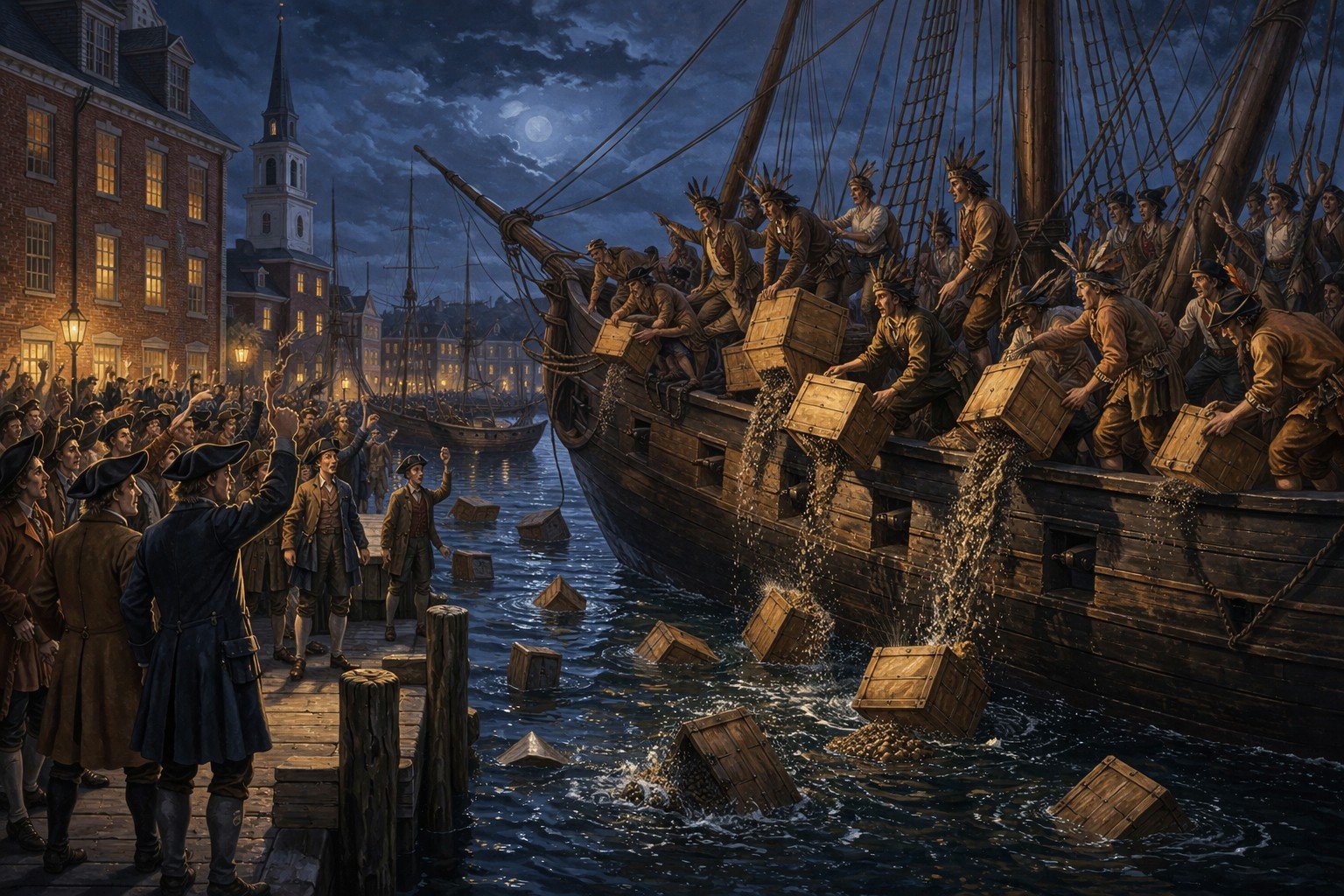
On the evening of December 16th, 1773, after it became clear that the tea would not be sent back to Britain, members of the Sons of Liberty and other participants carried out their plan. Disguised in part to conceal their identities, they boarded the ships in the harbor ( the Dartmouth, the Eleanor, and the Beaver) and began systematically destroying the tea cargo. Over the course of several hours, 342 chests of tea were broken open and dumped into the water.
The execution of the Boston Tea Party reflects the discipline and organization of the Sons of Liberty. The protest was focused and controlled, targeting only the tea and avoiding unnecessary damage to other property. This was not a spontaneous riot, but a carefully planned action designed to send a clear political message. By destroying the tea, the Sons of Liberty rejected both the tax itself and the broader authority it represented.
The role of the Sons of Liberty extended beyond the event itself. In the aftermath of the Tea Party, they helped to frame the narrative, presenting the action as a justified response to British overreach. Their networks also played a role in spreading news of the event to other colonies, contributing to a growing sense of unity and shared purpose.
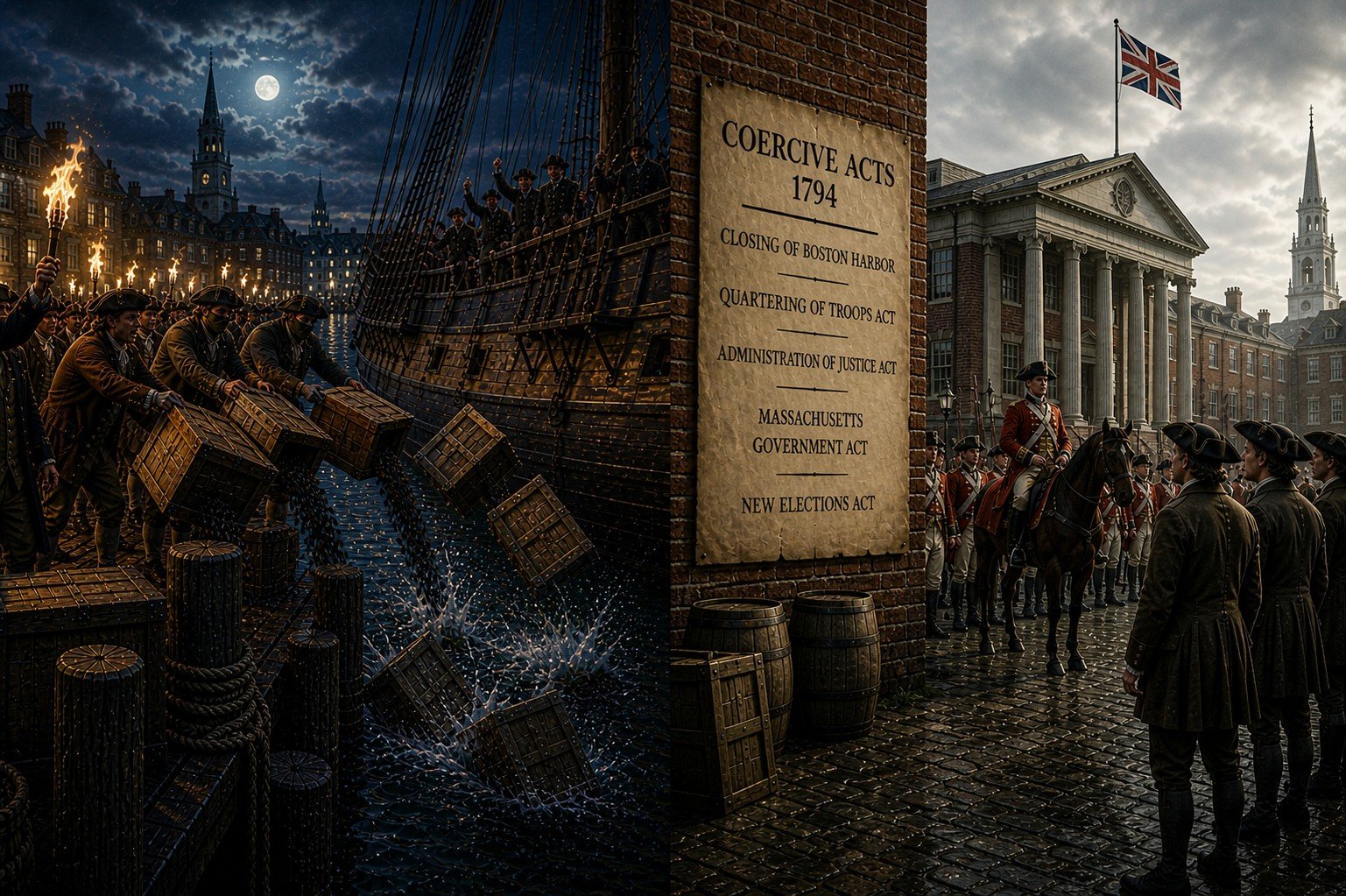
The British response, in the form of the Coercive Acts, further demonstrated the impact of the Sons of Liberty’s actions. Rather than isolating Boston, these punitive measures galvanized colonial opposition and strengthened the connections between different resistance groups. The groundwork laid by the Sons of Liberty in terms of communication and organization made it possible for this broader resistance to take shape.
The Sons of Liberty were instrumental in transforming colonial dissatisfaction into coordinated action. Their role in the Boston Tea Party highlights the importance of organization, leadership, and collective effort in shaping historical events. By mobilizing public opinion and executing a targeted act of protest, they helped to push the colonies closer to revolution, making them a central force in the struggle for American independence.