The Townshend Acts and the Boston Tea Party are closely linked steps in the escalation of tensions between Great Britain and its American colonies. Whilst the Boston Tea Party is often remembered as a dramatic, singular act of protest, it was in many ways the direct outcome of policies and reactions that began several years earlier with the Townshend program of taxation.
The Townshend Acts were introduced in 1767 by Chancellor of the Exchequer Charles Townshend as a way to raise revenue from the American colonies. Unlike earlier measures such as the Stamp Act, which taxed internal transactions, the Townshend duties were placed on imported goods, including glass, paper, paint, lead, and tea. British officials believed these external taxes would be more acceptable to colonists. However, many colonists did not see a meaningful distinction. To them, the issue was not the type of tax, but the principle behind it, i.e., Parliament asserting the right to tax colonies that had no direct representation.
In Boston, opposition to the Townshend Acts was particularly strong. Merchants, artisans, and political leaders organized resistance through boycotts of British goods, aiming to apply economic pressure. These non-importation agreements had a real impact, reducing trade and demonstrating the colonies’ ability to act collectively. Groups such as the Sons of Liberty played a central role in mobilizing public opinion, using pamphlets, public meetings, and social pressure to enforce compliance.
The enforcement of the Townshend duties also led to increased British presence in Boston. Customs officials required protection, and British troops were stationed in the city to maintain order. Rather than calming tensions, their presence heightened them. Daily interactions between soldiers and civilians were often hostile, creating an atmosphere of suspicion and resentment. This environment ultimately contributed to the Boston Massacre, an incident that intensified colonial opposition and further eroded trust in British authority.
Faced with widespread resistance and economic disruption, Parliament repealed most of the Townshend duties in 1770. However, the tax on tea was deliberately retained. This decision was crucial. Although the financial burden of the tea tax was relatively small, it served as a symbolic assertion of Parliament’s right to tax the colonies. In effect, the Townshend Acts left behind a lingering issue that remained unresolved.
Over the next few years, tensions simmered rather than disappeared. Colonists had demonstrated their ability to resist through boycotts, but the underlying constitutional dispute, whether Parliament had the authority to tax them, remained. The continued presence of the tea duty meant that the issue could resurface at any moment, especially if new policies drew attention back to it.
That moment came with the Tea Act of 1773. Designed to aid the financially struggling British East India Company, the act allowed the company to sell tea directly to the colonies at a lower price by bypassing middlemen. On the surface, this made tea cheaper for consumers. However, it also reinforced the existing tax on tea and threatened colonial merchants who had been part of the distribution system.
The legacy of the Townshend Acts shaped how colonists interpreted this new measure. Because they had already resisted similar taxation, many saw the Tea Act as a strategic attempt to secure acceptance of Parliament’s authority. The reduced price of tea was viewed not as a benefit, but as a trap, an effort to make colonists willingly accept a tax they had previously rejected. The principle at stake, established during the Townshend crisis, remained central.
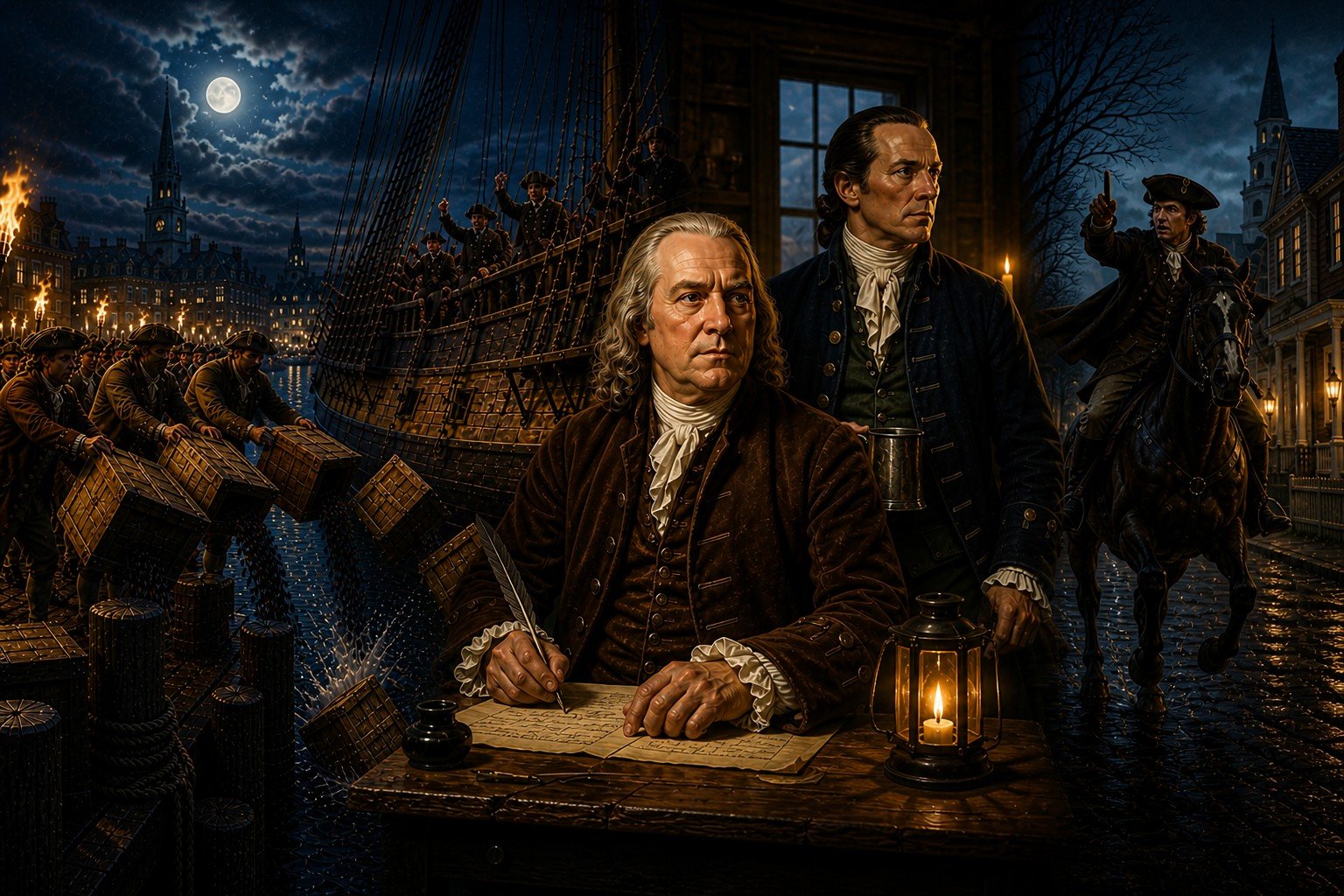
In Boston, resistance quickly organized once again. Meetings were held at locations such as the Old South Meeting House, where large crowds gathered to discuss how to respond to the arriving tea shipments. Leaders like Samuel Adams helped channel public sentiment into coordinated action, drawing on networks and strategies developed during the earlier boycotts.
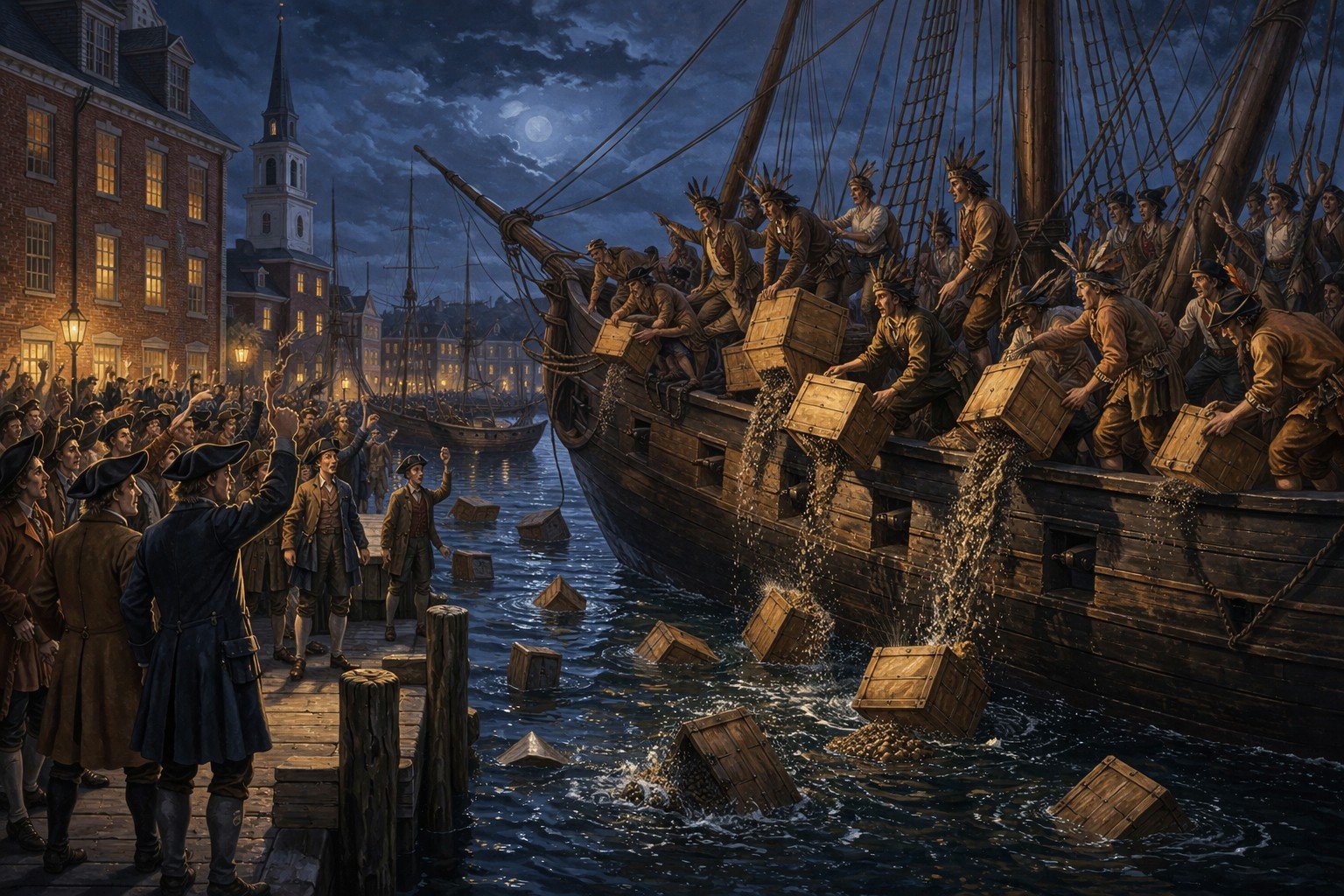
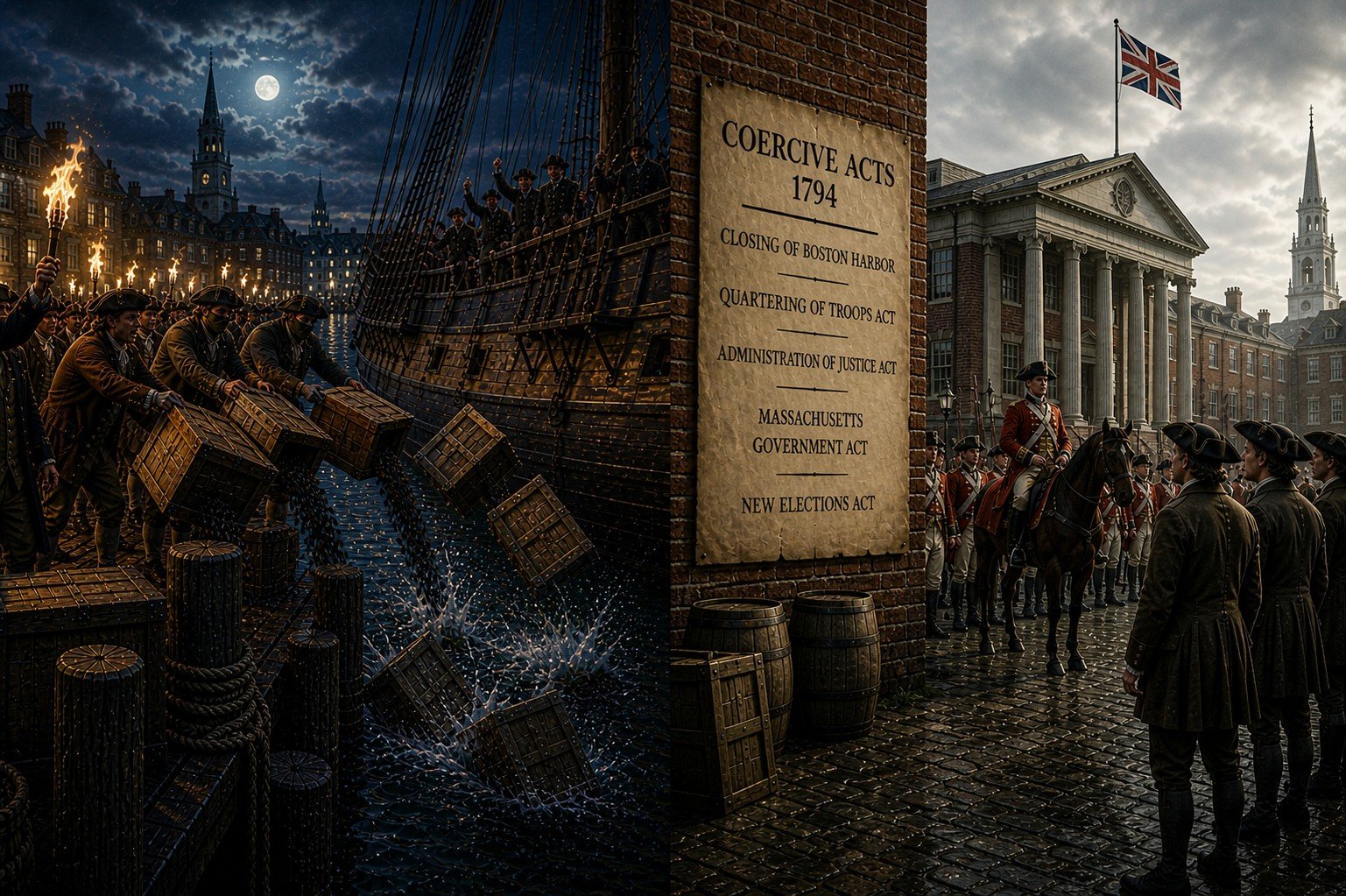
When efforts to have the tea returned to Britain failed, the protest escalated. On December 16th, 1773, a group of colonists boarded the ships in Boston Harbor and destroyed the cargo by dumping 342 chests of tea into the water. This act, carried out with organization and discipline, became known as the Boston Tea Party.
The connection between the Townshend Acts and the Boston Tea Party lies in both cause and continuity. The Townshend duties introduced the specific tax on tea that would later become the focus of protest. They also established patterns of resistance, boycotts, public mobilization, and organized defiance, that would be used again in 1773. Perhaps most importantly, they solidified the ideological conflict over taxation and representation, ensuring that even small measures could provoke large reactions.
In this way, the Boston Tea Party was not an isolated event but the culmination of a process that began with the Townshend Acts. What started as a revenue policy evolved into a broader confrontation over rights, authority, and governance. The lessons learned and the grievances formed during the Townshend crisis directly shaped the response to the Tea Act, leading to one of the most iconic acts of protest in American history.