The British East India Company played a central, if indirect, role in the chain of events that culminated in the Boston Tea Party. By the early 1770s, the Company was one of the most powerful commercial enterprises in the world, controlling vast territories and trade networks across Asia. Yet despite its global reach, it faced serious financial difficulties that would draw it into the political crisis unfolding in the American colonies.
Tea was one of the Company’s most important commodities. Imported from Asia and sold throughout Britain and its colonies, it was a staple product that generated significant revenue. However, by the early 1770s, the Company was struggling with a surplus of unsold tea and declining profits. Competition from smuggled tea, often brought in through non-British channels (Often by the Dutch), reduced demand for legally imported goods. At the same time, taxes imposed by the British government made official tea more expensive, further discouraging consumption.
To address these problems, Parliament passed the Tea Act. The act allowed the East India Company to sell tea directly to the American colonies, bypassing the usual system of wholesalers and merchants in Britain. This reduced costs and enabled the Company to offer tea at a lower price, even with the existing colonial tax still in place. From a British perspective, this seemed like a practical solution that would benefit both the Company and colonial consumers.
However, the reaction in Boston and other colonial ports was overwhelmingly negative. The Tea Act was seen not just as an economic measure but as a political strategy. By making taxed tea cheaper, it appeared to encourage colonists to accept the principle of parliamentary taxation. For many, this was unacceptable. The issue was not the price of tea, but the assertion of authority behind it.
The involvement of the East India Company also raised concerns among colonial merchants. By granting the Company the right to sell directly in the colonies, the Tea Act effectively gave it a monopoly over the tea trade. This threatened local businesses that had previously handled imports and distribution. Many merchants saw their economic interests at risk, adding a practical dimension to the ideological opposition.
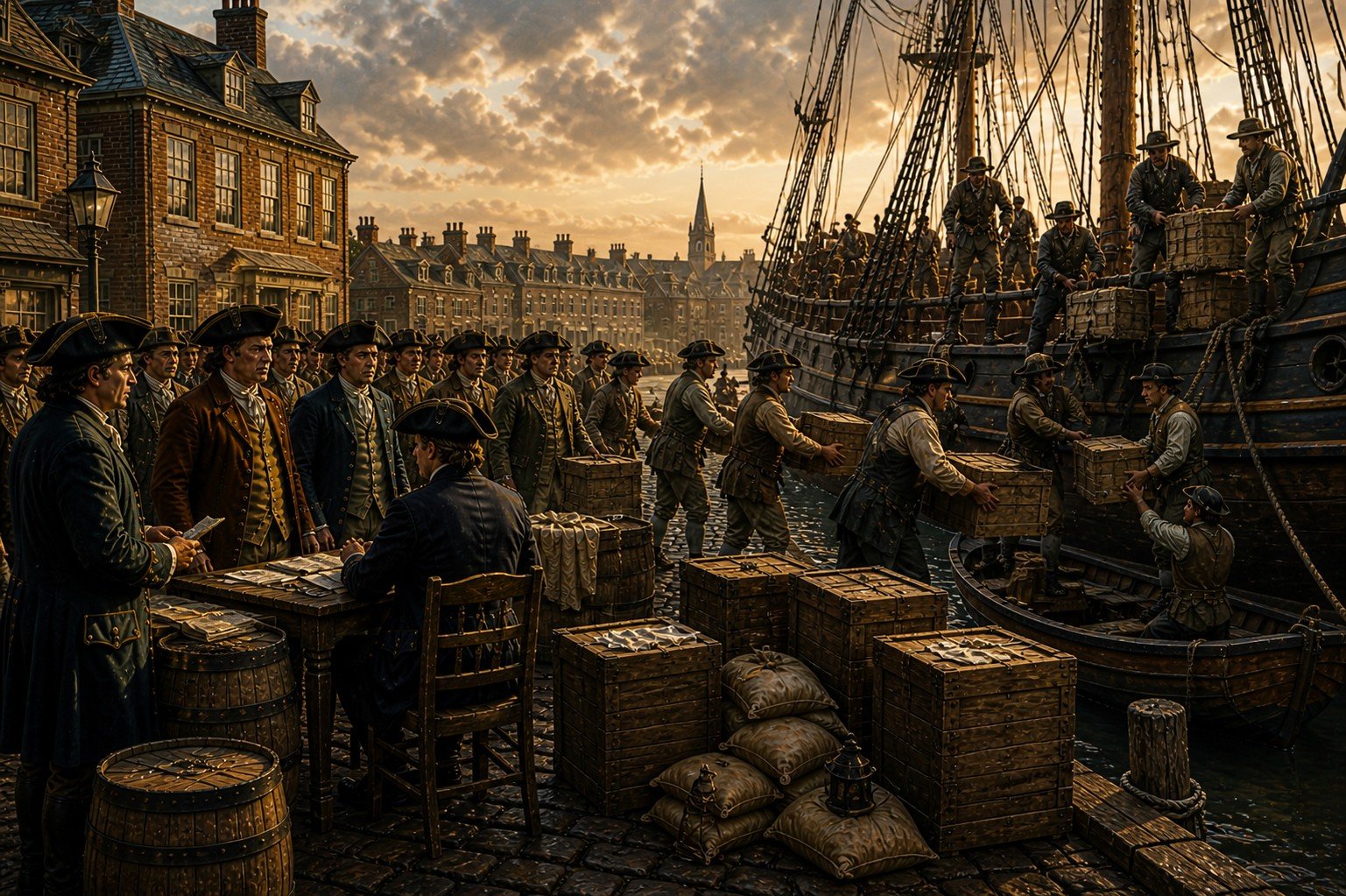
Resistance quickly organized. Public meetings were held at places like the Old South Meeting House, where large crowds gathered to discuss how to respond to the arriving tea shipments. Leaders such as Samuel Adams argued that accepting the tea would undermine the broader struggle for colonial rights. The presence of East India Company tea in Boston Harbor became a focal point for protest, symbolizing both economic control and political authority.
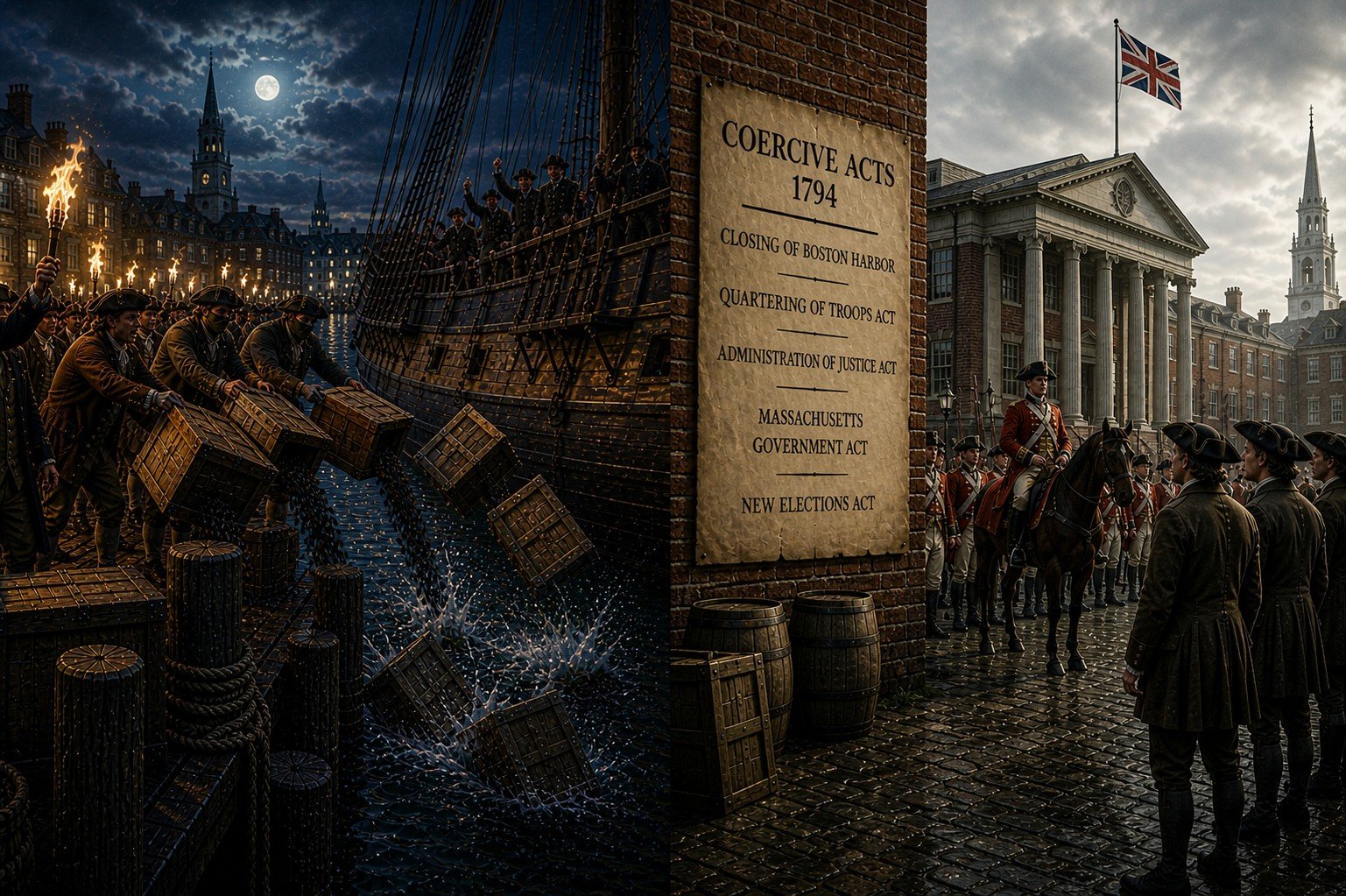
The ships carrying the Company’s tea, the Dartmouth, the Eleanor, and the Beaver, became the immediate targets of resistance. When efforts to send the ships back to Britain failed, the situation reached a critical point. On December 16th, 1773, a group of colonists, many associated with the Sons of Liberty, boarded the ships and began systematically destroying the cargo.
Over several hours, 342 chests of tea were broken open and dumped into the harbor. The act was deliberate and controlled, aimed specifically at the Company’s property rather than at individuals or other goods. This focus highlights the symbolic importance of the East India Company in the protest. By targeting its tea, the colonists were not only rejecting the Tea Act but also challenging the broader system of imperial trade and control that the Company represented.
The consequences of this action were significant. The British government responded with the Coercive Acts, which included closing Boston Harbor and imposing stricter control over the colony. These measures were intended to punish Boston and reassert authority, but they had the opposite effect, increasing solidarity among the colonies and pushing them closer to unified resistance.
The role of the East India Company in these events illustrates how economic and political factors were intertwined in the lead-up to the American Revolution. The Company’s financial difficulties led to policies that attempted to stabilize its position, but those policies also intensified colonial grievances. What might have been a commercial solution instead became a catalyst for political confrontation.
The East India Company’s influence on the Boston Tea Party lies in its position at the intersection of trade, taxation, and imperial authority. Its involvement transformed a debate over taxation into a direct conflict over economic control and political rights. The destruction of its tea was not just an act of protest against a single company, but a statement against the broader role of governance that the colonists were increasingly unwilling to accept.