
Boston Tea Party Books

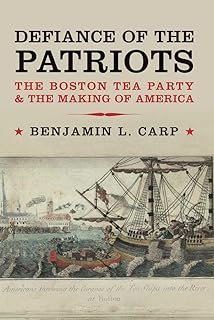
Defiance Of the Patriots

Defiance of the Patriots: The Boston Tea Party and the Making of America by Benjamin L. Carp is a deeply researched and engaging exploration of one of the most iconic events in early American history. Rather than presenting the Boston Tea Party as a simple act of rebellion, Carp examines it as a complex political, economic, and social event that emerged from both local tensions in Boston and the wider realities of the British Empire.

One of the book’s greatest strengths is its attention to detail and historical context. Carp goes beyond the familiar story of disguised colonists dumping tea into Boston Harbor and instead explores the wider world connected to the tea trade, including merchants, dockworkers, British officials, and even global trade networks extending to Asia and the Caribbean. This broader perspective gives the event a sense of scale and significance that many shorter histories lack.

The writing is scholarly but highly readable, balancing careful historical analysis with vivid storytelling. Carp effectively recreates the atmosphere of colonial Boston, from crowded public meetings at the Old South Meeting House to the tense confrontations surrounding the tea ships. He also challenges many myths surrounding the Tea Party, presenting the participants as organized political actors rather than simply a disorderly mob.

Another strength of the book is its balanced approach. Carp neither romanticizes nor dismisses the Tea Party, instead examining how it has been interpreted and used politically over time. He acknowledges the contradictions and complexities surrounding the event, including issues involving class, slavery, Native American imagery, and crowd action.

At times, the level of detail may feel dense for casual readers looking for a fast-paced narrative, but for those interested in Revolutionary history, the depth is rewarding. The book succeeds not only as a study of the Boston Tea Party itself but also as an examination of how protest movements develop and how symbolic events shape national identity.

Overall, Defiance of the Patriots is an excellent and authoritative history that combines strong scholarship with compelling storytelling. Benjamin Carp provides a nuanced and expansive account of the Boston Tea Party, making the book valuable for both general readers and serious students of American history.
American Tempest

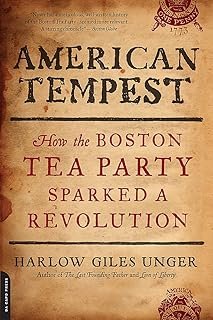
American Tempest: How the Boston Tea Party Sparked a Revolution by Harlow Giles Unger is an energetic and accessible account of the events surrounding the Boston Tea Party and the broader tensions that helped ignite the American Revolution. Rather than treating the Tea Party as a brief and isolated act of rebellion, Unger presents it as the culmination of decades of political frustration, economic conflict, and ideological change within the American colonies.

One of the book’s greatest strengths is its narrative style. Unger writes with pace and clarity, making complex political developments feel immediate and dramatic. The book often reads more like a historical thriller than an academic study, with vivid depictions of crowded Boston streets, tense public meetings, and confrontations between colonial leaders and British officials. This makes the work especially appealing to general readers who want an engaging introduction to Revolutionary America.

Unger also does a strong job of emphasizing the personalities involved in the conflict. Figures such as Samuel Adams, John Hancock, Thomas Hutchinson, and Paul Revere are presented not as distant historical icons, but as ambitious, flawed, and highly driven individuals operating in an atmosphere of uncertainty and rising tension. The author highlights how personal rivalries, economic interests, and political calculations all shaped the movement toward revolution.

Another notable aspect of the book is its focus on consequences. Unger argues that the Boston Tea Party triggered a chain reaction that transformed colonial resistance into a full-scale revolutionary movement. He examines how the British response, particularly the Coercive Acts, intensified opposition across the colonies and pushed Americans toward unity and eventual independence.

At times, the book leans toward dramatic interpretation, and some readers looking for a more deeply academic or balanced analysis may prefer works with heavier scholarly detail. However, Unger’s ability to make the period vivid and accessible is undeniable.

Overall, American Tempest is an engaging and highly readable history that successfully captures the drama, personalities, and political tensions surrounding the Boston Tea Party. It serves as both an entertaining narrative and a strong introduction to the origins of the American Revolution.

New England Remembers

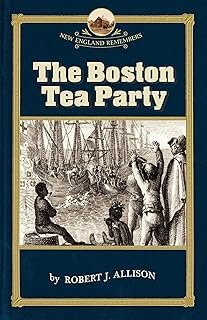
The Boston Tea Party (New England Remembers) by Robert J. Allison is a concise but highly effective introduction to one of the defining events of early American history. Part of the “New England Remembers” series, the book succeeds in making the Boston Tea Party accessible to general readers while still offering enough historical depth to satisfy those with a serious interest in the Revolutionary era.

One of the book’s greatest strengths is its clarity. Allison presents the events leading up to the Tea Party in a straightforward and engaging way, explaining the political tensions, taxation disputes, and colonial resistance movements that shaped the crisis. Rather than focusing only on the night of December 16, 1773, the book places the Tea Party within the broader conflict between Great Britain and the American colonies.

The writing style is concise and readable, making the book especially useful for readers looking for a brief but informative overview. Allison effectively captures the atmosphere of Boston during the period, describing crowded public meetings, the arrival of the tea ships, and the growing anger toward British authority. Important figures such as Samuel Adams and Thomas Hutchinson are presented clearly without overwhelming the narrative.

Another strength of the book is its attention to the aftermath of the Tea Party. Allison explains how the British response, particularly the Coercive Acts, transformed a protest over taxation into a larger imperial crisis that pushed the colonies closer to revolution. This helps readers understand why the Tea Party became such a pivotal historical moment rather than simply an isolated protest.

Because the book is relatively short, some readers may wish for deeper analysis or more detailed discussion of individual participants and political debates. However, its brevity is also part of its appeal, making it approachable for students, tourists, and casual history readers.

Overall, The Boston Tea Party (New England Remembers) is an engaging and informative overview of the event and its significance. Robert Allison combines solid scholarship with an accessible style, producing a book that serves as an excellent introduction to the origins of the American Revolution.