Samuel Adams
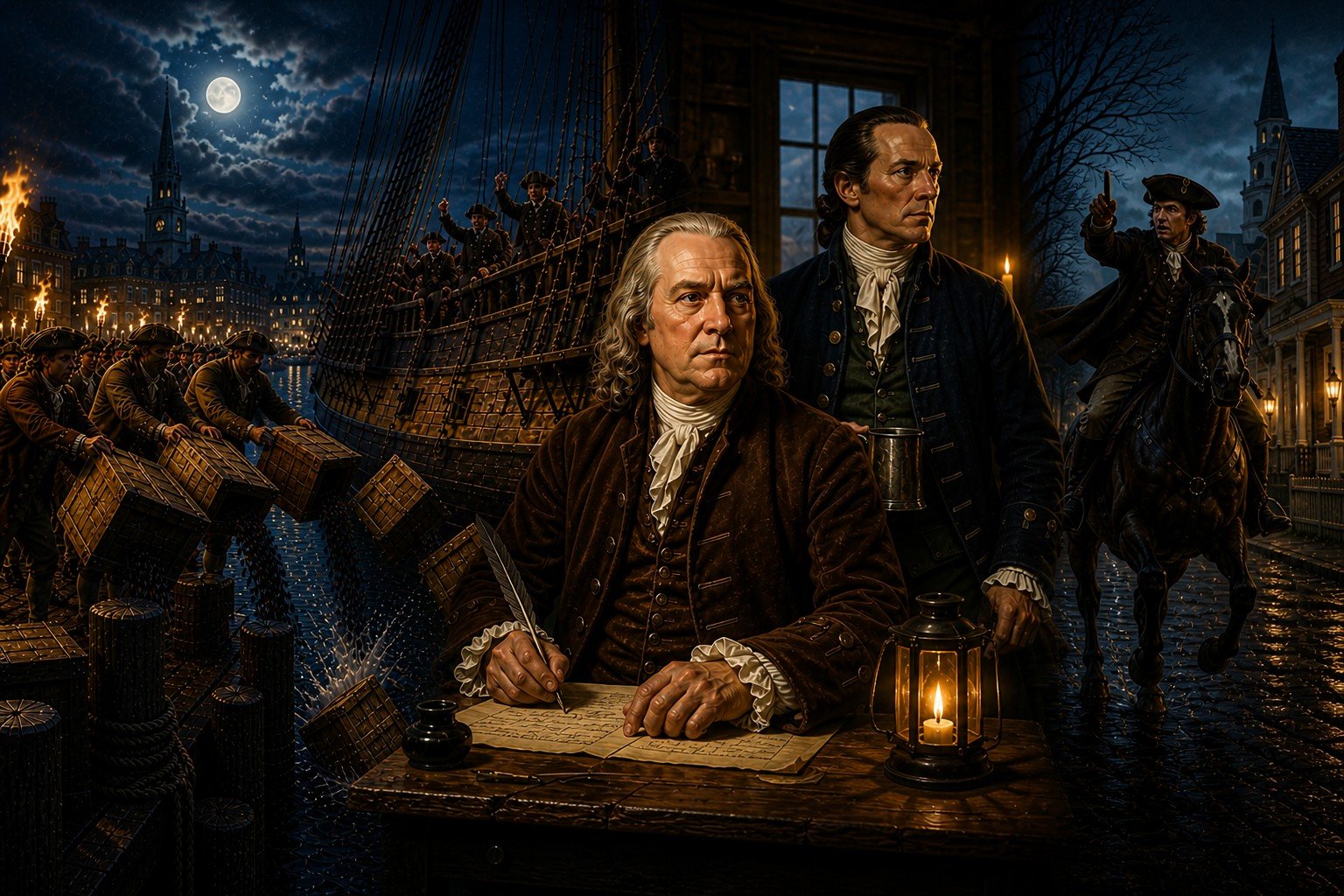
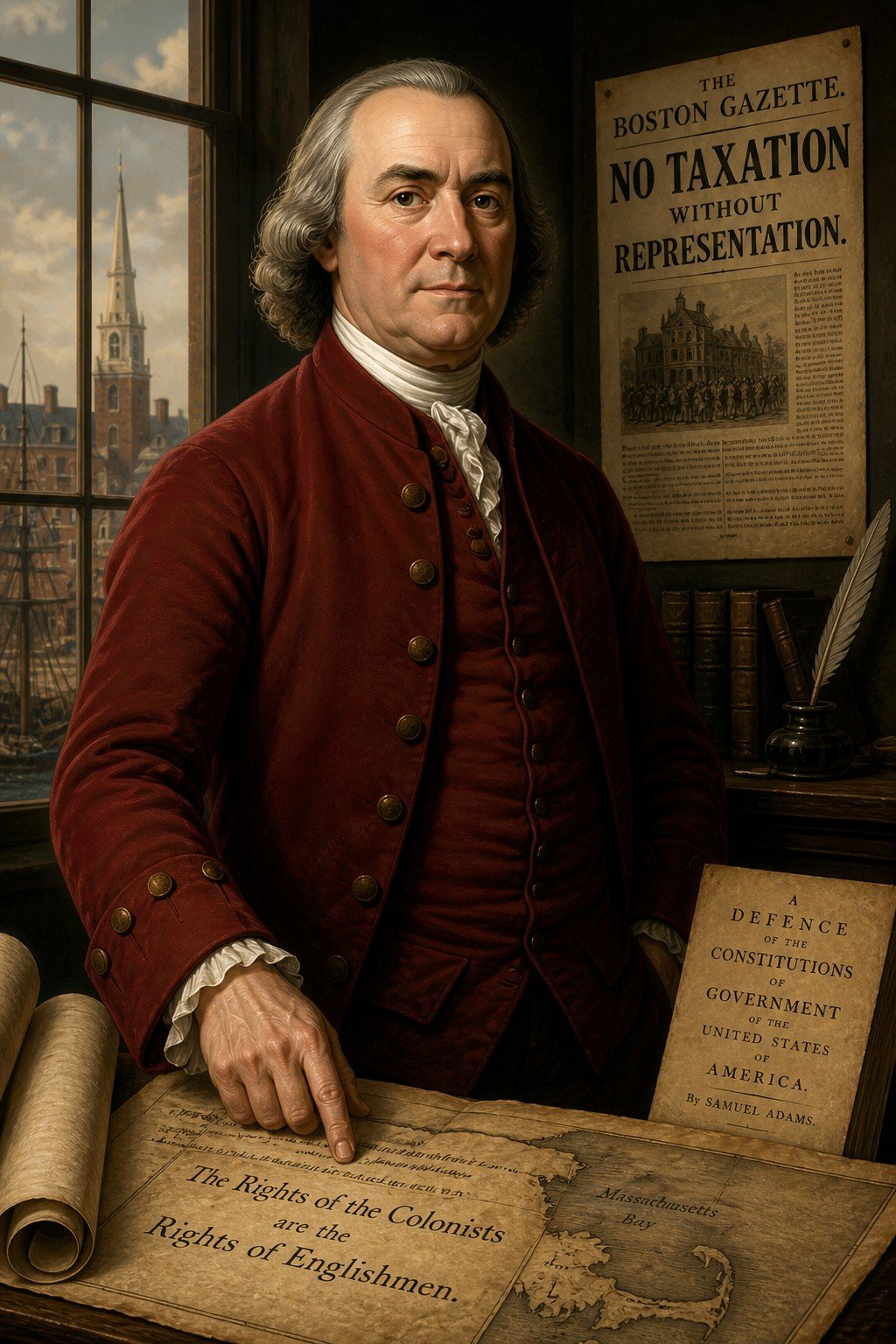 Samuel Adams was one of the most influential leaders behind the Boston Tea Party, though he was not among the men who physically boarded the ships and
dumped the tea. His role was primarily that of organizer, strategist, and political voice, helping to shape both the resistance movement and the
conditions that led to direct action.
Samuel Adams was one of the most influential leaders behind the Boston Tea Party, though he was not among the men who physically boarded the ships and
dumped the tea. His role was primarily that of organizer, strategist, and political voice, helping to shape both the resistance movement and the
conditions that led to direct action.
In Boston, Adams was a central figure in mobilizing opposition to British taxation policies. As a leader of the Sons of Liberty, he helped coordinate protests, boycotts, and public messaging that framed taxation without representation as a violation of colonial rights. His ability to communicate these ideas clearly and persuasively made him a key force in building widespread support.
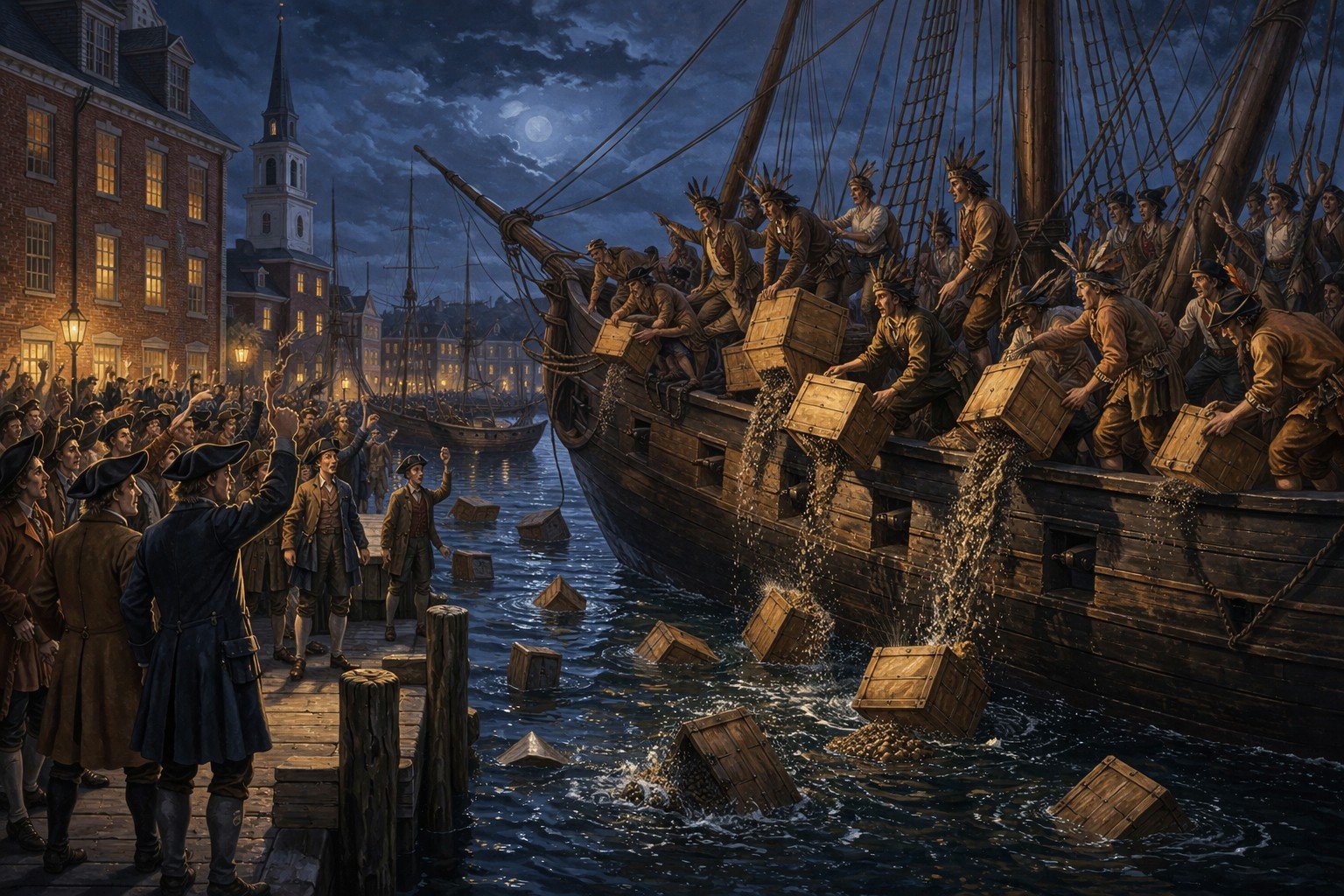
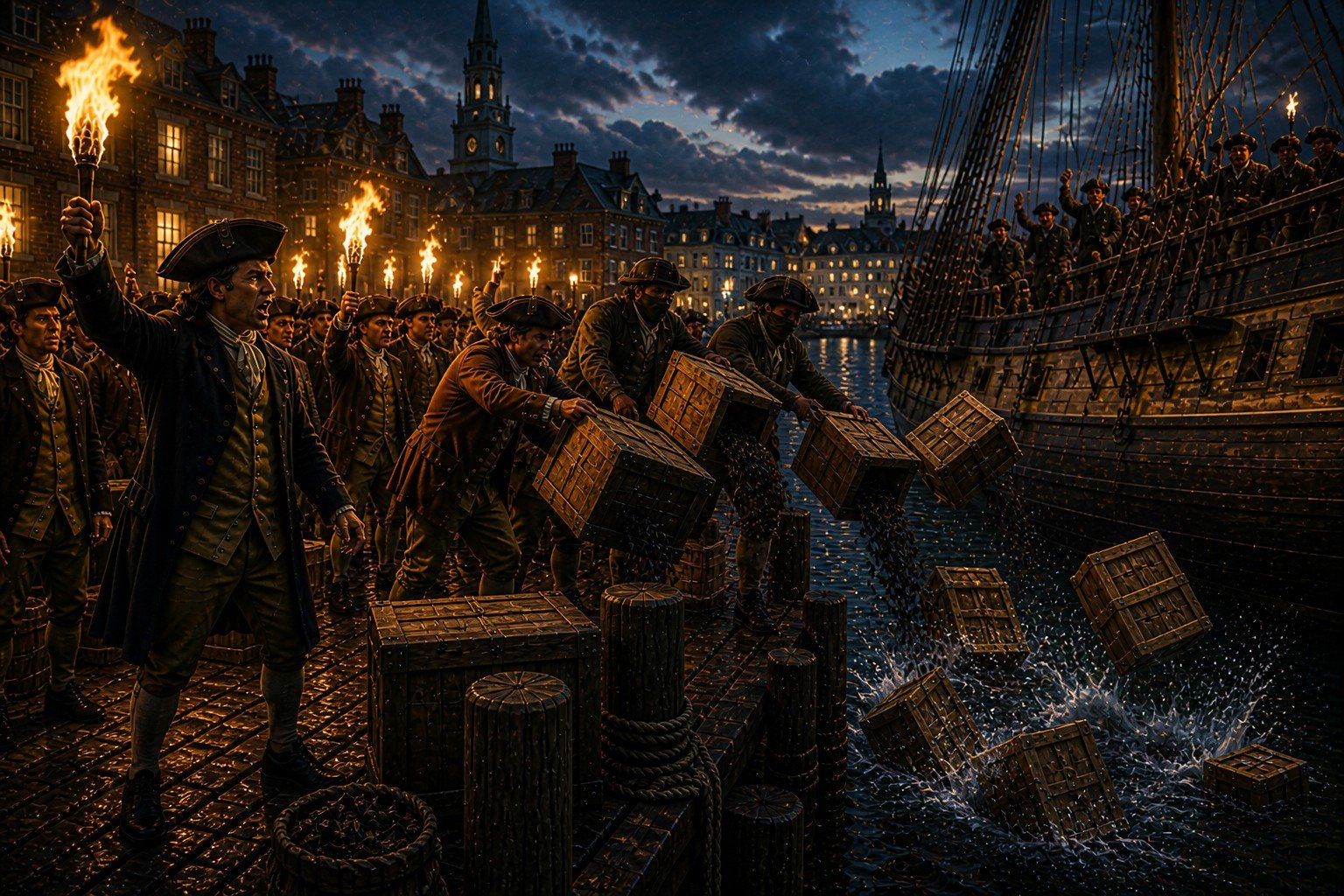
In the weeks leading up to the Tea Party, Adams played a critical role in organizing large public meetings at the Old South Meeting House. These gatherings brought together thousands of colonists to debate how to respond to the arrival of taxed tea. When efforts to have the tea returned to Britain failed, Adams helped guide the movement toward a decisive response.
Although he did not publicly call for the destruction of the tea, his leadership and influence helped create the environment in which the Boston Tea Party became both possible and widely supported.
Paul Revere
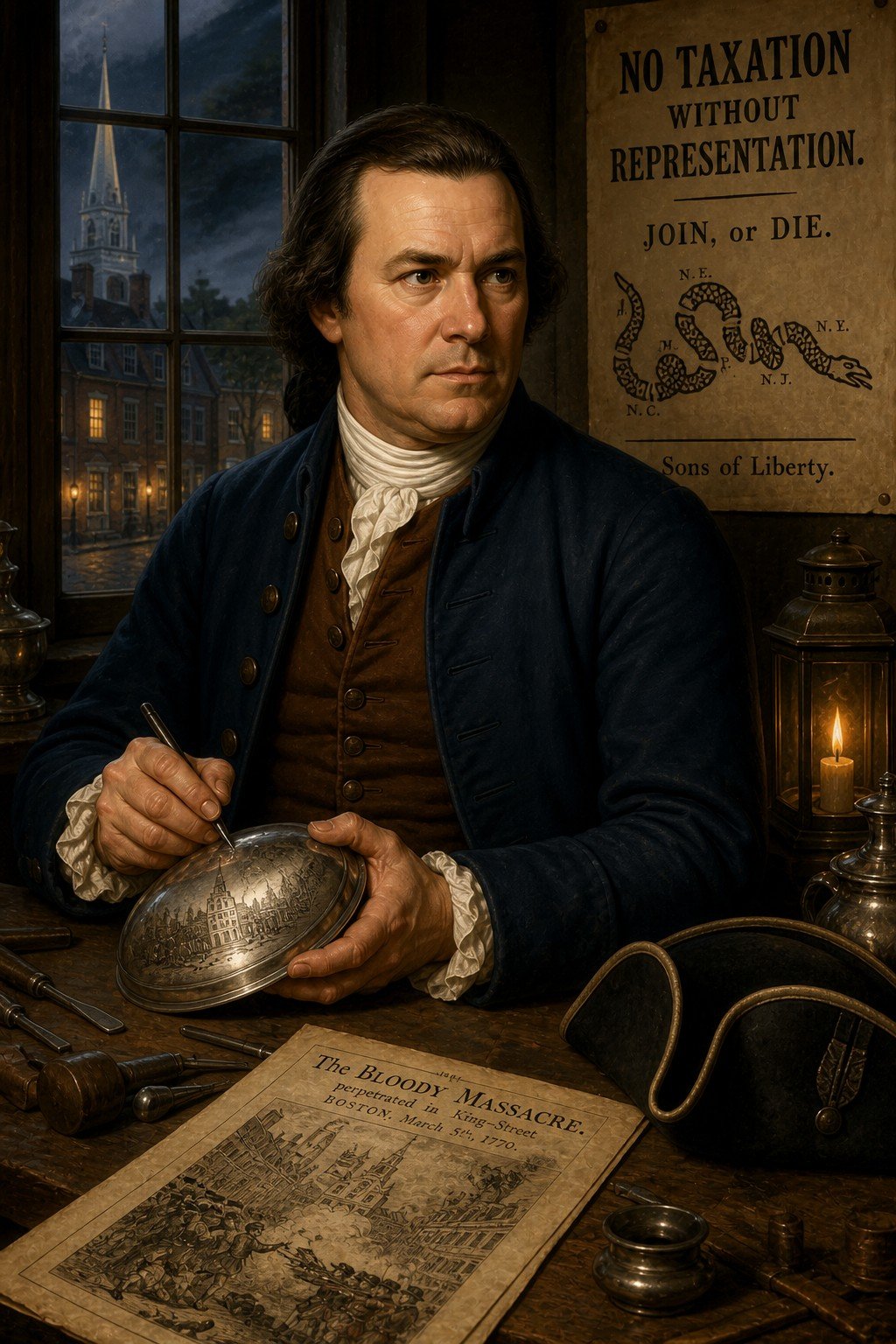 Paul Revere played an important but indirect role in the Boston Tea Party, contributing through organization, communication, and support rather than direct
participation in the destruction of the tea. Known primarily for his later Midnight Ride, Revere was already deeply involved in the Patriot movement in
Boston during the early 1770s.
Paul Revere played an important but indirect role in the Boston Tea Party, contributing through organization, communication, and support rather than direct
participation in the destruction of the tea. Known primarily for his later Midnight Ride, Revere was already deeply involved in the Patriot movement in
Boston during the early 1770s.
As an active member of the Sons of Liberty, Revere helped coordinate resistance to British policies, including the Tea Act. His skills as an engraver and craftsman also made him a valuable propagandist. Earlier, his widely circulated engraving of the Boston Massacre had helped shape colonial opinion, demonstrating how visual media could influence public sentiment. This experience carried over into the period leading up to the Tea Party, where communication and messaging were crucial.
Revere’s most significant contribution was as a courier and organizer. He frequently rode between Boston and other colonies, carrying news, letters, and intelligence that helped unify resistance efforts. In the days surrounding the Tea Party, these communication networks ensured that colonial leaders were informed and coordinated in their response to British actions.
Although there is no clear evidence that Revere was among those who boarded the ships on December 16th, 1773, his role in building the infrastructure of resistance made the event possible. His efforts helped connect individuals, spread ideas, and sustain the movement that ultimately led to the Boston Tea Party.
John Hancock
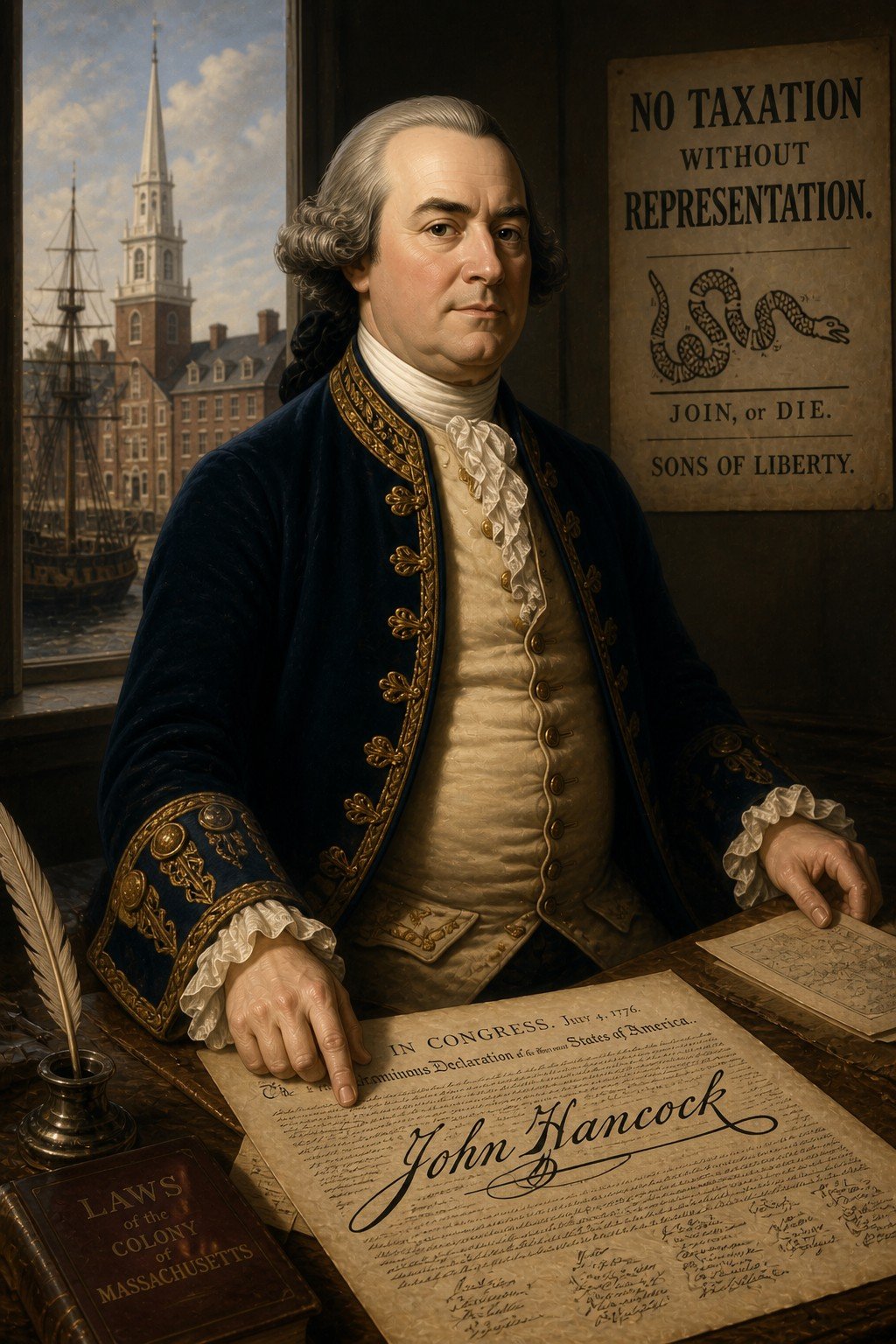 John Hancock was a prominent figure in Boston politics and commerce, and although he did not physically take part in the Boston Tea Party, his influence on
the events leading up to it was significant. As a wealthy merchant, Hancock was directly affected by British trade policies, including taxation and restrictions
that threatened colonial economic independence.
John Hancock was a prominent figure in Boston politics and commerce, and although he did not physically take part in the Boston Tea Party, his influence on
the events leading up to it was significant. As a wealthy merchant, Hancock was directly affected by British trade policies, including taxation and restrictions
that threatened colonial economic independence.
Hancock was closely associated with the Sons of Liberty, working alongside leaders such as Samuel Adams to oppose British authority. His prominence and resources made him an important supporter of resistance efforts, helping to fund and legitimize opposition movements. British officials viewed him as a key agitator, and his ship, the Liberty, had previously been seized over customs violations, further intensifying his conflict with British authorities.
In the lead-up to the Tea Party, Hancock supported efforts to prevent the unloading of taxed tea in Boston Harbor. He attended and backed large public meetings, including those at the Old South Meeting House, where colonists debated how to respond. While he did not join the group that destroyed the tea, his leadership and economic standing helped sustain the resistance movement.
Hancock’s role highlights how influential figures contributed to the broader environment that made the Boston Tea Party possible, even without direct participation.
Thomas Hutchinson
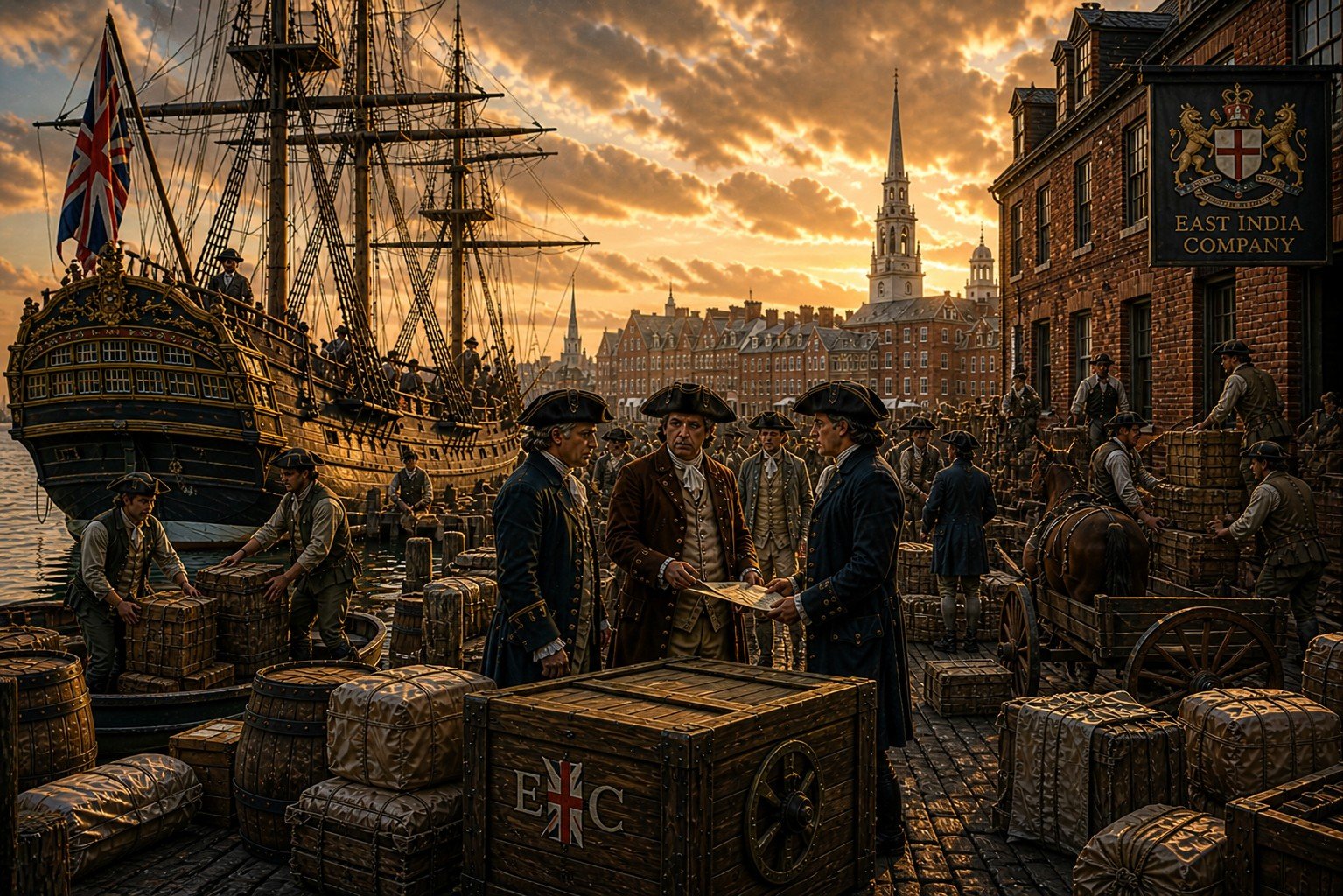
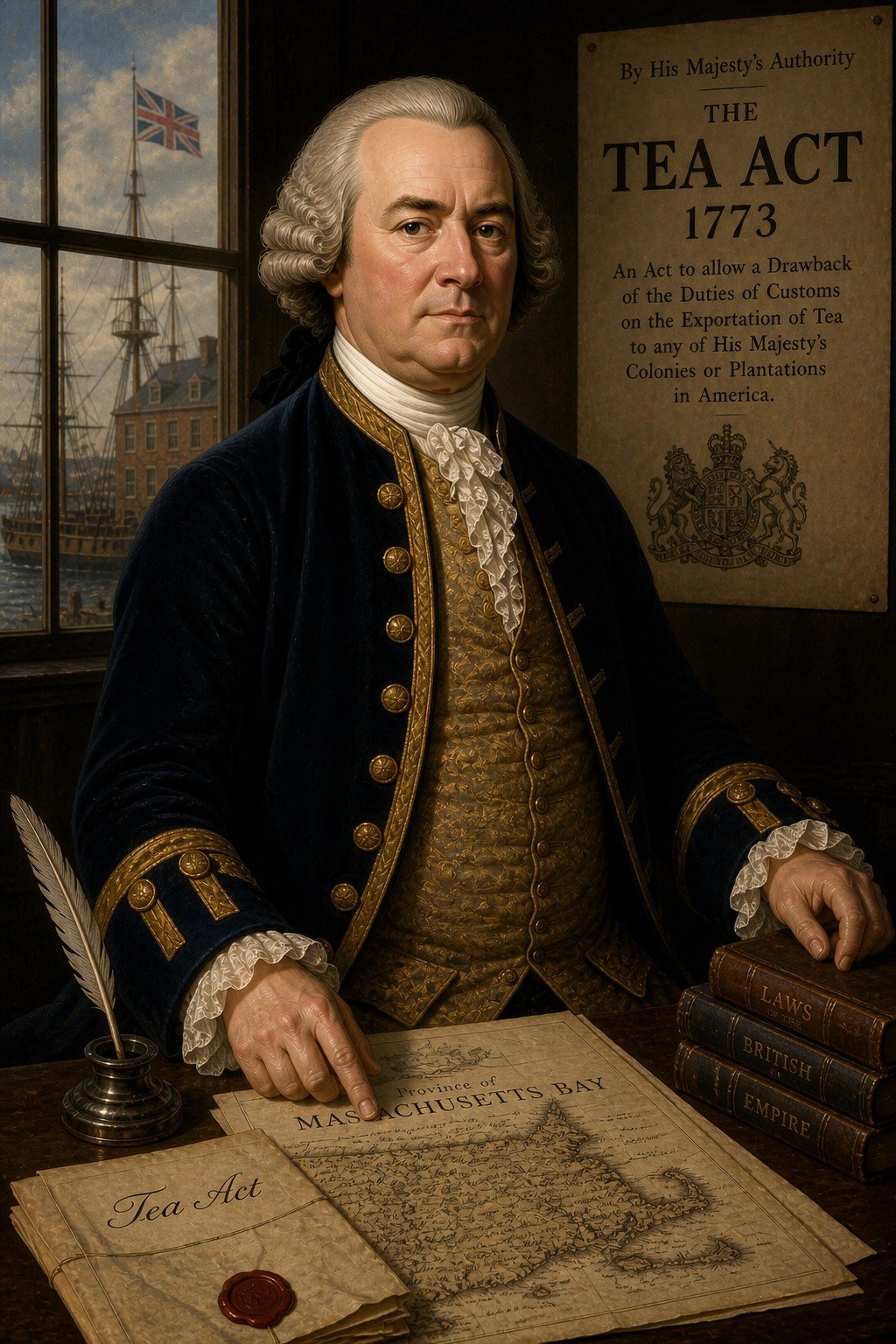 Thomas Hutchinson was a central figure in the events leading up to the Boston Tea Party, representing British authority in Boston. As royal governor, Hutchinson
was responsible for enforcing British law, including the controversial Tea Act, which allowed the British East India Company to sell tea directly in the colonies
whilst maintaining a tax on it.
Thomas Hutchinson was a central figure in the events leading up to the Boston Tea Party, representing British authority in Boston. As royal governor, Hutchinson
was responsible for enforcing British law, including the controversial Tea Act, which allowed the British East India Company to sell tea directly in the colonies
whilst maintaining a tax on it.
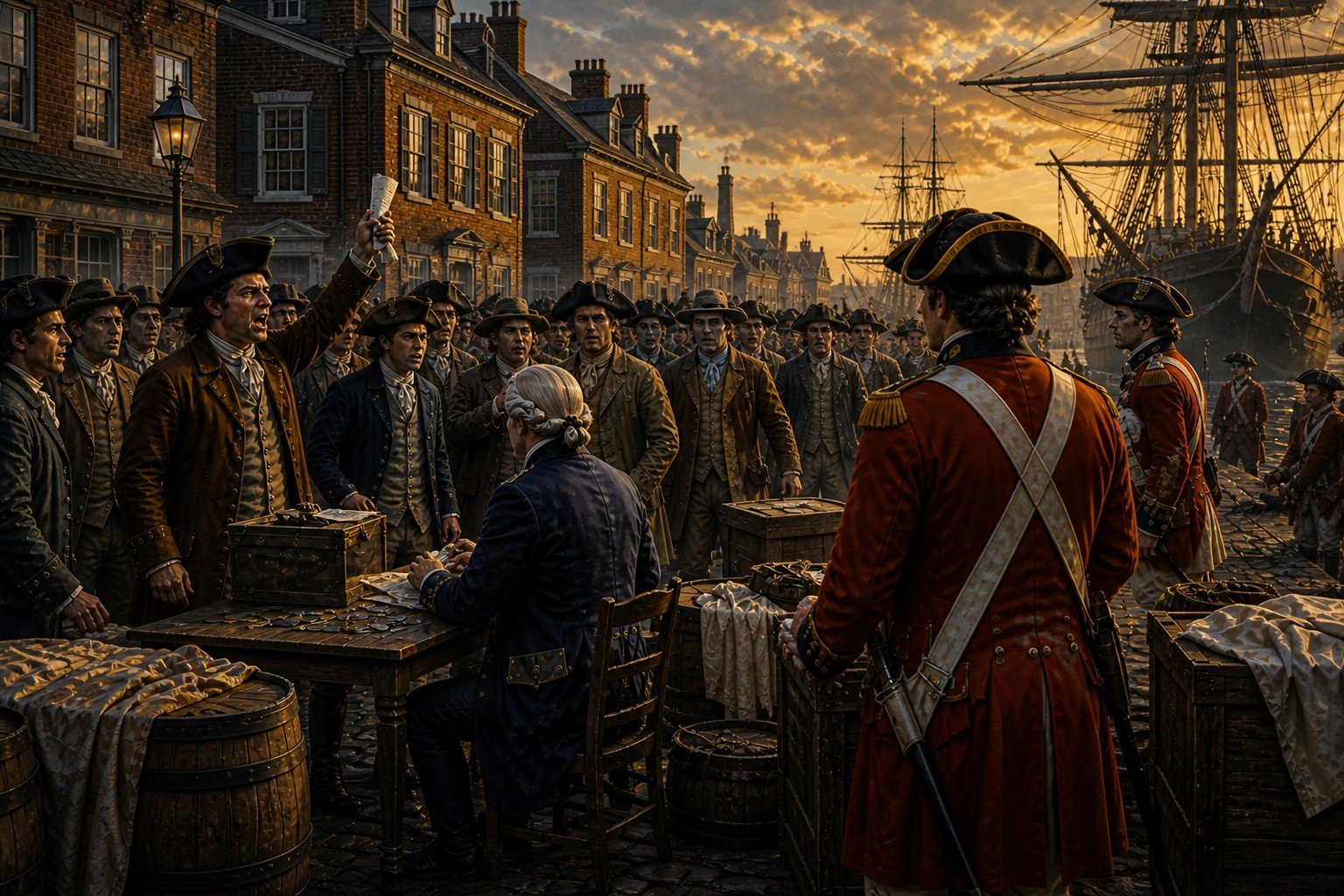
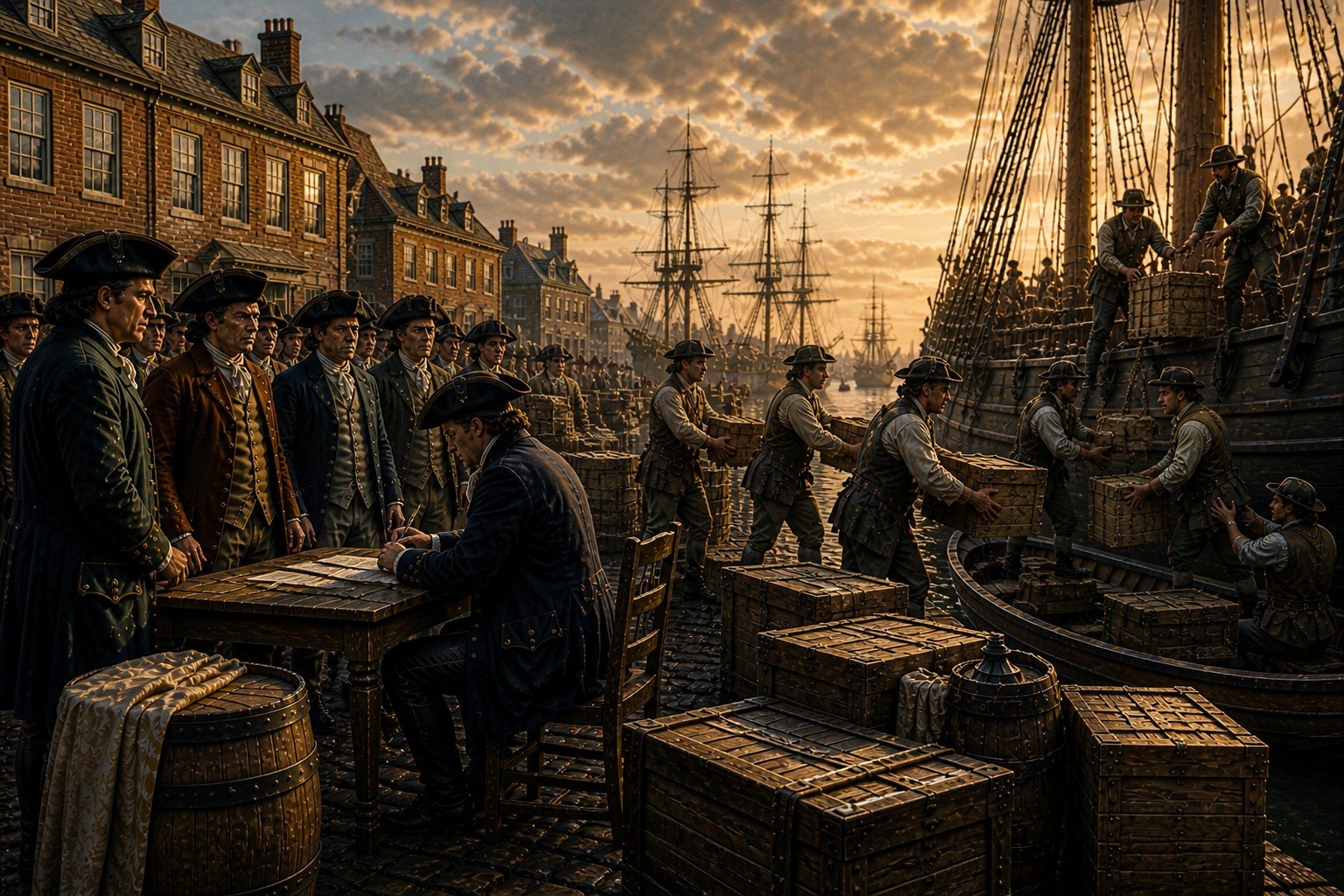
Hutchinson believed strongly in Parliament’s right to govern and tax the colonies, and he was determined to uphold imperial authority despite growing colonial resistance. When ships carrying taxed tea arrived in Boston Harbor in late 1773, many colonists demanded that the cargo be sent back to Britain without being unloaded. However, Hutchinson refused to grant clearance for the ships to leave, insisting that the tea be landed and the duties paid. His stance created a tense standoff between colonial protesters and British officials.
As pressure mounted, large public meetings were held at the Old South Meeting House, where thousands gathered to debate the next steps. Hutchinson remained firm, believing that any concession would weaken British control.
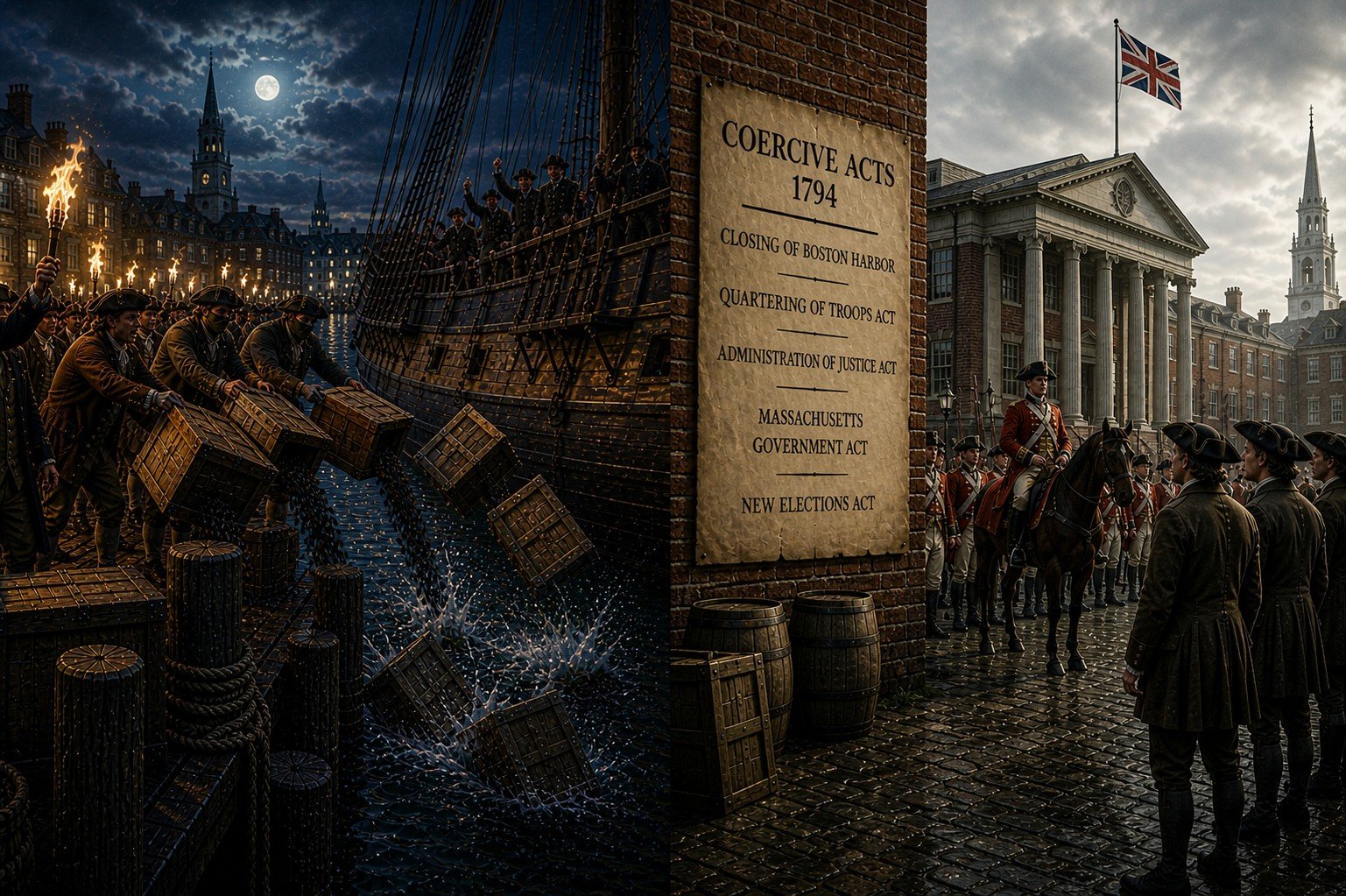
His refusal to compromise ultimately forced the crisis to a breaking point. When the legal options were exhausted, colonists turned to direct action, leading to the destruction of the tea on December 16th, 1773. Hutchinson’s decisions therefore played a critical role in shaping the circumstances that made the Boston Tea Party inevitable.